Pacaya or Acatenango?
Pacaya is a half-day walk on an active volcano; Acatenango is a hard overnight facing Fuego's eruptions. Effort, cost, what you see and who each suits.
Choose Acatenango if watching a volcano erupt is the reason for your trip and you can manage a hard two-day climb; choose Pacaya if you have only half a day, want an easier walk or are traveling with children. From the Acatenango camps you look across at Fuego, which has erupted continuously since 4 January 2002, according to the Smithsonian Global Volcanism Program, and the glow shows best after dark. Pacaya is active too as of November 2026: on 11 November, CONRED told visitors to keep away from its lava flows and from the fissures on its west flank. What you see on either volcano still changes from day to day, and no tour can promise you lava.
Check Availability

What you see from each volcano
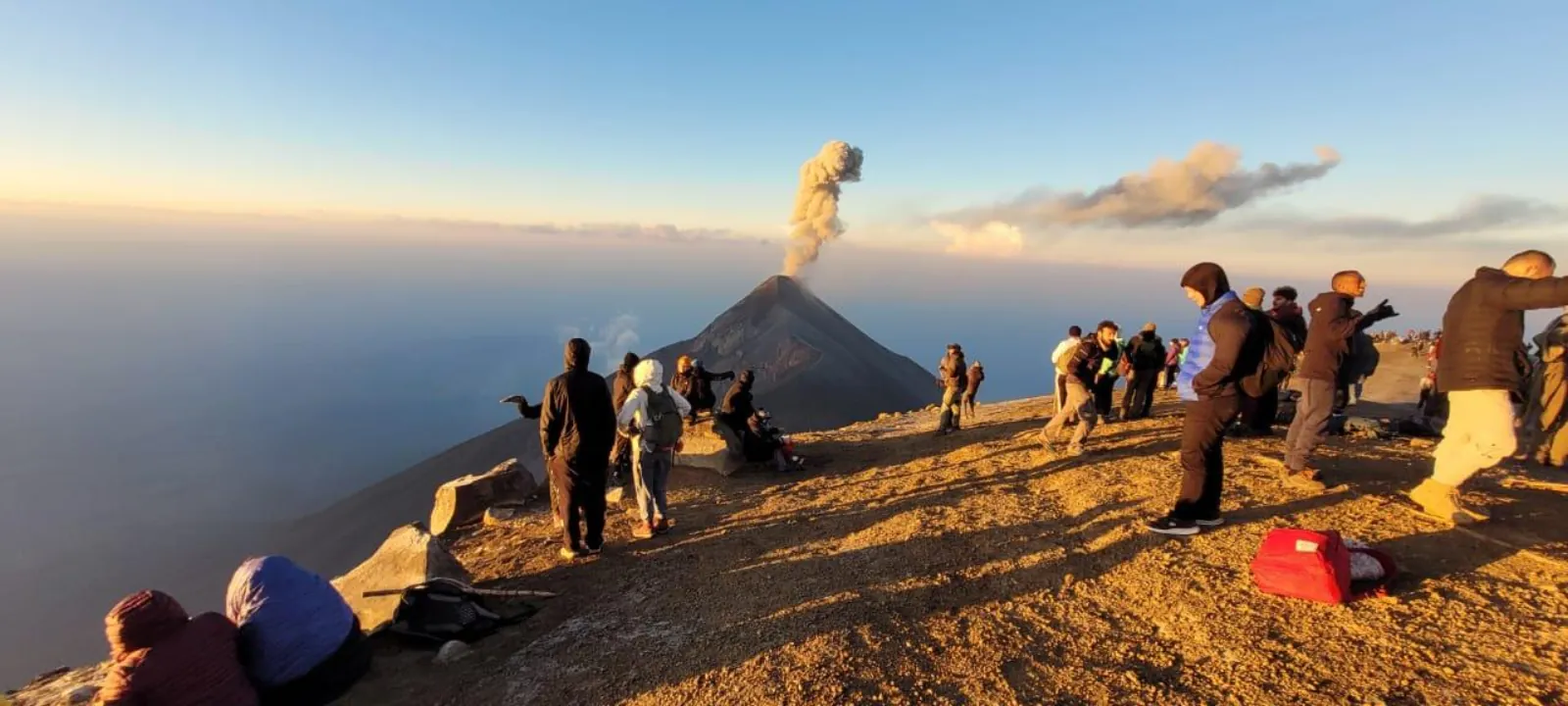
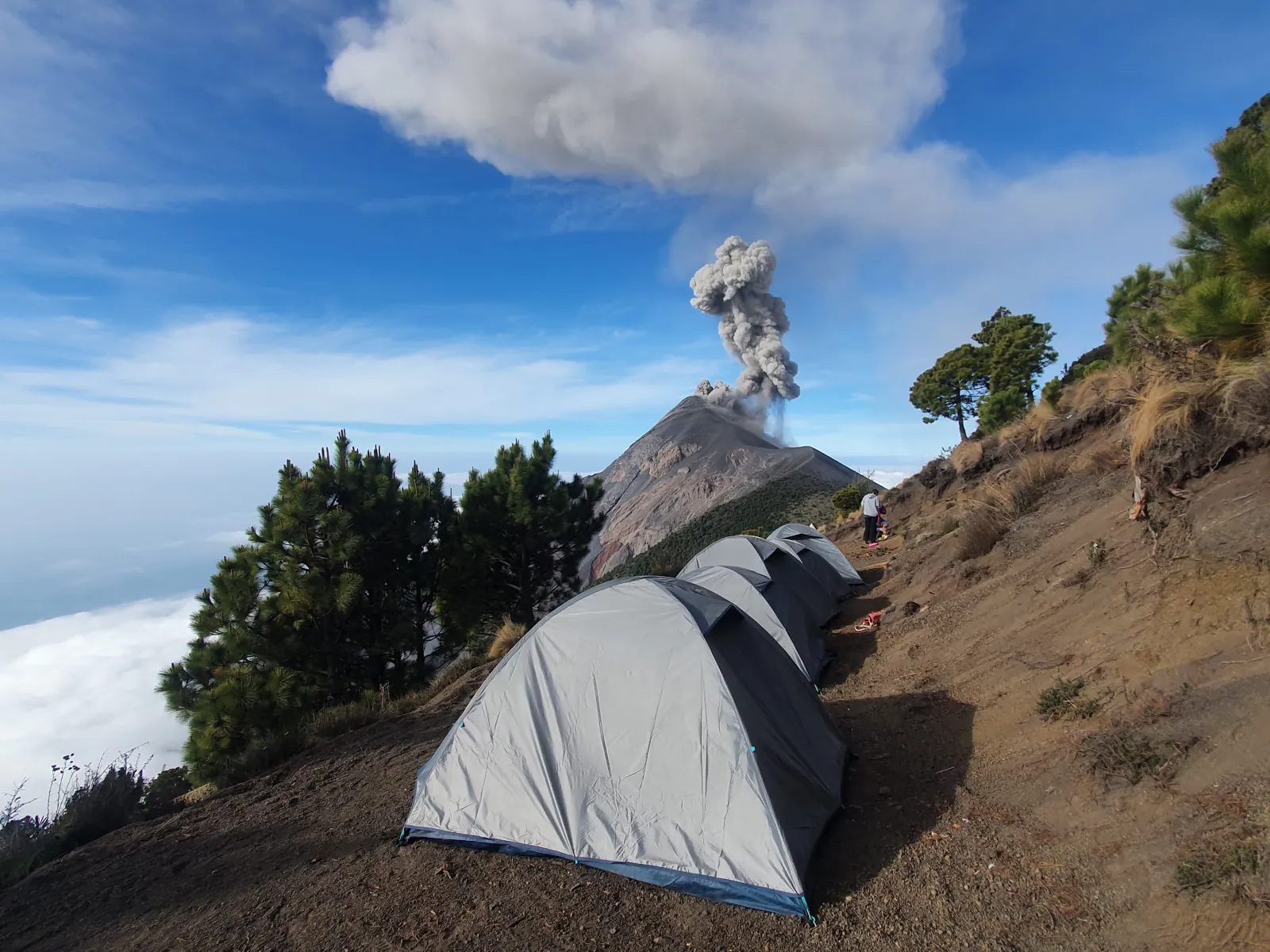
From an Acatenango camp, Fuego erupts in bursts across the saddle, about 3 km from summit to summit. INSIVUMEH’s daily bulletins from 31 October to 12 November 2026 logged roughly 1 to 8 explosions an hour, with glowing rock thrown 100 to 300 m above the crater. By day you see gray ash columns; after dark you see the flash of each explosion, then hear the boom a few seconds later. Because you spend the evening and the early morning at camp, you get many hours of watching, and the odds of seeing the glow are better than on a short visit. Cloud can still hide Fuego all night.
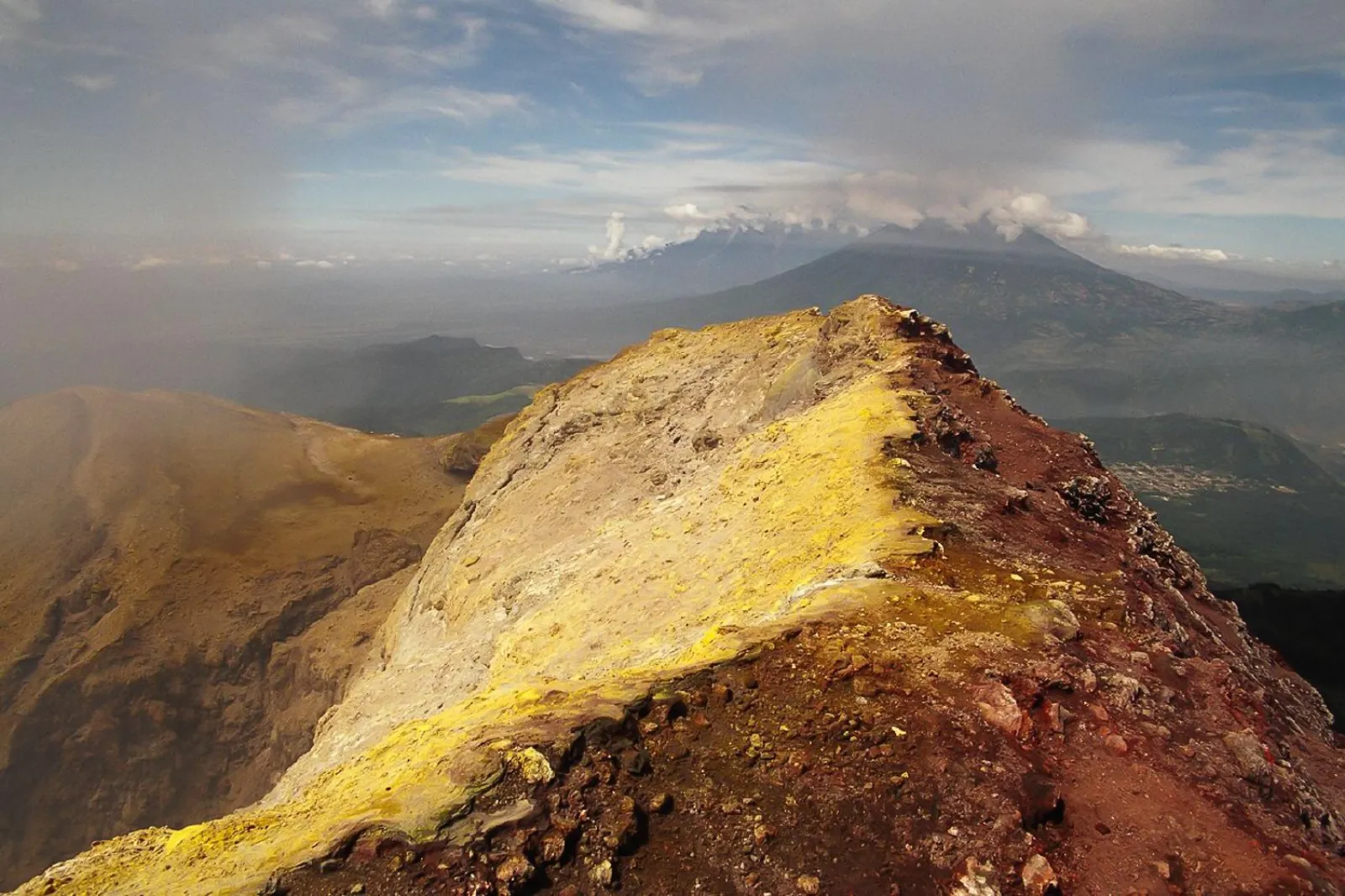
On Pacaya you walk through pine forest and up a volcanic ash slope to a plateau of old lava, with the main crater in the distance. Guides do not take groups into the crater, and CONRED advises against climbing the Mackenney cone because of its gases. On a clear day you look across to Agua, Fuego and Acatenango, and the tours on this site stop to toast marshmallows over steam vents. The lava is the uncertain part. Pacaya is active, but whether your group sees glowing lava depends on that day’s activity, the route your guide is allowed to take, the cloud and the light. In daylight a lava flow can look like dark rock with a little heat shimmer. Lower-rated reviews from earlier years mention walks with only steam to see, and cloud at the top.
Effort, time and cost side by side
| Pacaya | Acatenango overnight | |
|---|---|---|
| Time from Antigua | About 6 hours, including a drive of about 1 to 1.5 hours each way | 2 days and 1 night; back in Antigua around noon on day two |
| Walking | About 1.5 to 2 hours up, about 3 hours round trip | 4 to 6 hours up to camp, an optional 1 to 1.5 hour summit push from about 4 a.m., 3 to 4 hours down |
| Highest point | About 2,550 m | Camps at about 3,400 to 3,750 m; summit 3,976 m |
| Night | In your Antigua bed | At camp, around or below freezing |
| Park fee | Q100 cash, not included on the two Pacaya tours on this site | Q100 cash, included on some tours only |
| Tours on this site | From US$23 per person | From US$57 per person |
| What you see of Fuego | A distant cone across the valley by day | Eruptions about 3 km away, best after dark |
| Main hazards | Loose ash on the descent, gas near the cone | Cold, altitude, a long climb on loose ground |
The gap in effort is wide. On Pacaya you walk up one clear path for about 1.5 to 2 hours, and horses are offered if you tire, while on Acatenango you gain about 1,500 m on loose volcanic sand and then sleep in thin, cold air. The Acatenango tours on this site all tell you to report headaches, dizziness or breathlessness to your guide at once, because the camps sit high enough for altitude illness.
Age limits follow the same line. One Pacaya tour on this site takes children from 4 and another lets under-5s in free, while Acatenango listings set minimums of 10 to 13 and some exclude people over 65 or 70. Weather affects both, but Acatenango more. Clear nights are likelier in the dry season, from November to April, and from May to October cloud often hides the view from both summits. Plan a spare day in Antigua whichever you book.
Other Experiences
Other experiences you might enjoy
Half-day Pacaya hikes and overnight Acatenango tours from Antigua, so you can compare the short walk with the night facing Fuego.
Who should pick Pacaya
Pick Pacaya if you have one free morning or afternoon in Antigua, if you are new to hiking, or if you travel with children or with someone who cannot face a cold night on a mountain. It also suits travelers who want to stand on an active volcano without committing two days and a freezing camp. Go with the right expectations: you get a forest walk, an otherworldly lava field, views of the volcanic chain on a clear day and a chance of seeing lava, not a promise of it.
If Fuego is the volcano you came for and you cannot do the overnight, Pacaya shows it only from a distance. The guide to seeing Fuego from Antigua covers the rooftops and viewpoints closer to town.
Who should pick Acatenango
Pick Acatenango if watching eruptions at night is what you want, you are fit enough to climb steadily for 4 to 6 hours, and you can accept a night around freezing. The view across the saddle is the reason to go, and on a clear night you can watch Fuego from dinner until you fall asleep, then again at the 4 a.m. summit push, when you can stand above the clouds with Fuego smoking below. Before you choose a tour, check whether the listing still sells a hike toward Fuego from camp. Climbing Fuego is banned, so skip that extra even if your guide offers it.
For a group capped at 12 with A-frame cabins, the A-frame cabin overnight costs from US$90 per person and is rated 4.5/5 from 1,040+ reviews on GetYourGuide; the park fee and water are extra. The Acatenango tours facing Fuego compares the rest, and you can follow Fuego’s latest bulletin on the activity page for today.
The Pacaya tours on this site
Volcano Expeditions’ Pacaya tour costs from US$23 per person and is rated 4.5/5 from 1,420+ reviews on GetYourGuide. It runs about 6 hours with hotel pickup in Antigua, a bilingual guide and marshmallows for the steam vents. The Q100 park fee (listed as US$15) and food are extra, and you can cancel free up to 24 hours before (our review).
Marvelus Travel’s Pacaya trek also costs from US$23 per person and is rated 4.4/5 from 860+ reviews on GetYourGuide, with hotel pickup, a local guide, marshmallows and the same 24-hour free cancellation. It does not take children under 4 or adults over 80, and the Q100 fee is extra (our review).
Lower-rated reviews of both tours describe the same things. Horse handlers follow groups up the trail and push rides, so say no clearly if you want to walk. Some people who booked in English got a guide who spoke only Spanish. Several found the steam vents too cool for proper toasting. Wear shoes with good grip for the loose ash on the descent, carry water and a light jacket, and bring Q100 in cash. We earn a commission if you book through our links, at no extra cost to you.
Frequently asked questions
Is Pacaya erupting now?
Pacaya is active as of November 2026. On 11 November, CONRED told visitors to keep away from its lava flows and west-flank fissures and not to climb the Mackenney cone. What you see on a given walk varies.
Will I see lava on Pacaya?
Maybe, but no tour can promise it. It depends on the day’s activity, the route your guide can use, the cloud and the light. Some visitors see only steam and the old lava field.
Which is better for seeing Fuego erupt?
Acatenango. Its camps sit about 3 km from Fuego’s summit, and you stay overnight, when the glow shows. From Pacaya, Fuego is a distant cone across the valley.
How hard is Pacaya compared with Acatenango?
Pacaya is about 1.5 to 2 hours up to a high point of about 2,550 m. Acatenango is 4 to 6 hours up about 1,500 m to camps at 3,400 to 3,750 m, then a cold night.
Can children do Pacaya or Acatenango?
Pacaya, yes: one tour on this site takes children from 4. Acatenango listings set minimum ages of 10 to 13, so check the listing before you book for a teenager.
How much does each cost?
Pacaya tours on this site start at US$23 per person; Acatenango overnights start at US$57. Most tours of both add the Q100 cash park fee, so check the listing.
Pick Your Night Facing Fuego
The A-frame cabin overnight is rated 4.5 from 1,040+ reviews on GetYourGuide, with free cancellation up to 24 hours before. Check Fuego's latest activity and the park status the day before you go.
Check Dates & Tour Options