Where to stay in Guatemala for volcano trips
Antigua, Lake Atitlán, Xela, the Acatenango trailhead, San Vicente Pacaya and Guatemala City compared as bases for volcano hikes: which volcano each one suits, how many nights to book and what to ask before you pay.
Stay in Antigua Guatemala if you want an Acatenango overnight facing Fuego, a Pacaya hike or a view of Fuego from a lookout. Every Acatenango overnight on this site collects you in Antigua, the town has the widest choice of rooms, and you come back from the mountain to a hot shower and a restaurant. Go to Lake Atitlán for volcano views from your hotel and slower days on the water, and to Quetzaltenango (Xela) for harder western-highland hikes with a local guide. Keep Guatemala City for an arrival or departure night.
Check Availability
Decide which volcano you want before you choose a hotel. On a map the peaks look close together, but they are not interchangeable day trips, and a “volcano view” room may face a different volcano from the one you came to see.
Check the official status before you set out. On 11 November 2026, Guatemala’s disaster agency CONRED told hikers to read INSIVUMEH’s volcano and weather bulletins and follow local authorities before any climb. Climbing Fuego itself is banned, and the Acatenango park has closed during strong eruptions; Fuego today shows the latest activity. A bookable tour or a hotel listing does not show that a route is open or safe. Read CONRED’s hiking advice, INSIVUMEH and our page on whether Fuego is safe to visit.
Six volcano bases compared
| Base | Good for | Volcano trips from here | Where you sleep | Main drawback |
|---|---|---|---|---|
| Antigua Guatemala | First visits, organized tours, the nights around an Acatenango trek | Acatenango overnights facing Fuego; Pacaya half-days; Cerro de la Cruz and Hobbitenango lookouts | Boutique hotels, courtyard guesthouses, hostels, apartments | Busy and sometimes noisy; many “volcano view” rooms face Agua |
| Acatenango trailhead villages | A deliberately rural stay with a guide already arranged | Acatenango trail access, when open | A few small guesthouses; check the exact location | Few services and far less choice than Antigua |
| Lake Atitlán | Lake views framed by volcanoes, relaxed days | San Pedro and other lake routes, with a local guide | Lakeside hotels, hillside lodges, village guesthouses | A poor start point for an Acatenango overnight |
| Quetzaltenango (Xela) | Strong hikers and the western highlands | Santa María; Santiaguito only from permitted viewpoints | Small hotels, homestays, hostels | Long trip from the airport, cold nights |
| Guatemala City | Airport nights and some Pacaya departures | Pacaya day tours | Airport and business hotels | Traffic, and little to walk to |
| San Vicente Pacaya | Travelers who want a village stay near Pacaya | Pacaya, on the routes open that day | Very limited small-scale stays | Few services; no guarantee of crater access or lava |
For most travelers: book two nights in Antigua before an Acatenango overnight and the night you come down, as our Antigua where-to-stay page explains. The trek itself includes its night at a camp on the mountain. If the weather or a closure stops the hike, Antigua still has plenty to fill the days.
Antigua Guatemala: the base for Acatenango and Pacaya
Antigua sits at 1,545 m among three volcanoes. The broad cone above the rooftops in most photos is Agua; Fuego and Acatenango stand to the southwest, about 16 to 18 km from town, so a hotel’s “volcano view” may not include the one that erupts. See stays in Antigua for your dates.
Why it works for volcano trips:
- Every Acatenango overnight on this site picks you up in Antigua, and you are back around midday the next day. Confirm the exact pickup point with your operator.
- Pacaya runs as a half-day trip from Antigua with hotel pickup.
- Most hotels and hostels store a main suitcase while you are on the mountain, if you ask. Keep documents, medicines and valuables with you.
- Shops and tour offices rent warm clothing and gear; check sizes and condition before you rely on them.
- If cloud, a closure or illness moves your hike, the town has enough to fill a spare day.
Where in town to sleep, in short:
- Central grid, near Parque Central: you walk to restaurants, tour offices and pickup points. Ask for a courtyard-facing room if you need a good sleep before the trek. The central grid section of our Antigua page lists hotels street by street.
- North toward Cerro de la Cruz: hillside spots with views across town to Agua. The slope is less fun when you come back tired from a trek, so check the address and late-arrival arrangements.
- Quieter edges such as Santa Ana and Jocotenango: larger rooms and less night noise, often at the cost of a taxi ride. Not every operator collects there, so ask before you book.
For the hike, a practical room beats a lavish one: a hot shower, safe luggage storage, breakfast or a café nearby and a booking you can move. Send the hotel one question before you pay: “Can I store my bag while I’m on an overnight Acatenango tour and collect it the next afternoon?” If you want a terrace that looks at Fuego, use the list of hotels that name the volcano they face.
Antigua suits couples, solo travelers, families planning gentler outings and most first-time visitors. It suits you less if you want seclusion, or a guaranteed view of Fuego erupting from your bed.
Other Experiences
Other experiences you might enjoy
Volcano tours that start from Antigua: Acatenango overnights facing Fuego, Pacaya half-days and the Hobbitenango viewpoint above town.
The Acatenango trailhead: closest is not always easiest
Staying at the foot of Acatenango sounds efficient. In practice, guided treks drive you from Antigua, and the villages near the trail are smaller and colder, with few services for visitors. The starting point can also differ by operator.
A night near the trail makes sense if you have a specific local guide or community stay arranged and want time in the rural highlands. It makes less sense if the plan is to save a short drive and you lose easy luggage storage, restaurants and onward transport. Stays in Acatenango town are few, so read the exact location on each listing.
Ask before you book:
- Where exactly is the property, and is the road passable in wet weather?
- Is there hot water?
- Can the host arrange an authorized local guide, and will the guide collect you there?
- Who confirms on the day that the route is open?
Sleeping on the volcano
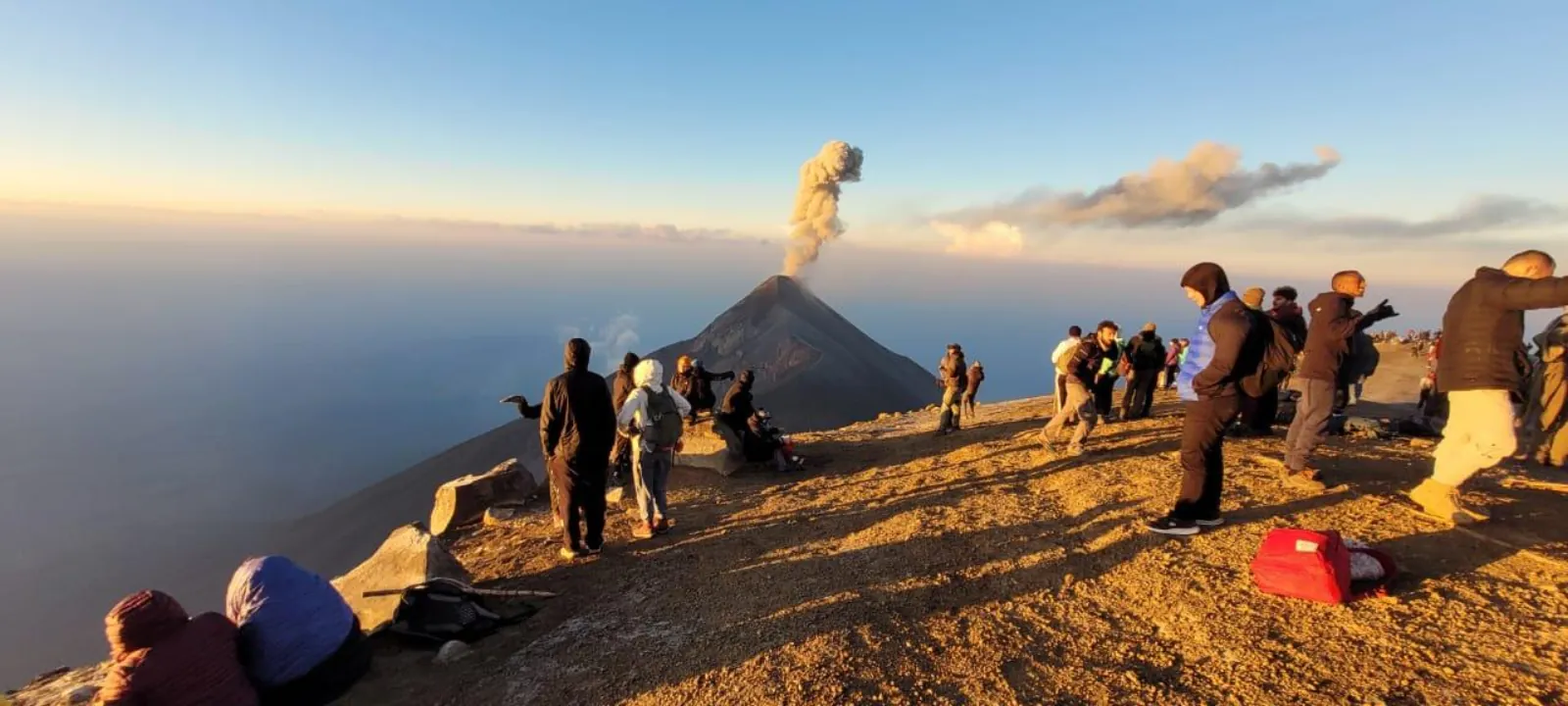
The night on Acatenango is part of a guided trek and you do not book it as a hotel stay. Camps sit at about 3,400 to 3,750 m, and operators use tents, shared shelters, cabins or domes. On 31 March 2026, Guatemala’s protected-areas agency CONAP warned that cabins used by visitors and tour companies had been built inside Acatenango’s protected area without authorization, so a structure on a booking page is not proof it has a permit.
Ask for the camp’s location, what you sleep in, its current permission, the bedding for the cold and the emergency plan. Expect a much colder night than in Antigua, and no promise that cloud will clear. The Acatenango Volcano Overnight Tour (2 Days and 1 Night), from US$90 and rated 4.5/5 from more than 1,000 reviews on GetYourGuide, sleeps in an A-frame cabin facing Fuego. Our page on Acatenango overnight cabins compares every setup.
Lake Atitlán: volcano scenery without a night on a mountain
Three volcanoes line the southern shore of Lake Atitlán: San Pedro, Tolimán and Atitlán. You come here to look at them from a breakfast table as the light changes on the water; none of the three is erupting. Browse stays around the lake.
Lake Atitlán does not replace Antigua for Fuego. An Acatenango overnight is far simpler from Antigua, where the pickups are, so do the trek first and travel to the lake afterward to recover.
Which lake village suits you
| Village | Why stay there | What to check |
|---|---|---|
| Panajachel | Easiest road arrival, the most rooms and onward transport | Traffic, waterfront noise, distance from the pier |
| Santa Cruz La Laguna | Hillside and lakeside lodges with wide lake-and-volcano views | Boat-only access to many lodges, steep paths and stairs with luggage |
| San Pedro La Laguna | Social backpacker base, local guides for the San Pedro area | Noise, steep streets, current trail safety |
| San Juan La Laguna | Art, textiles, cafés and a calmer village | Exact location and transport back after dark |
| San Marcos La Laguna | Quiet retreats and a slow pace | Steep paths; a retreat-focused atmosphere |
| Santiago Atitlán and the southern shore | Local culture and a different angle on the volcanoes | Road and boat logistics, fewer services |
Pick Panajachel for a short stay or heavy bags, Santa Cruz for a quiet lodge with a view, San Juan for village life, and San Pedro for a social stay and a guided hike. These match trip styles; they do not rank safety or hotel quality.
Hiking at the lake
Volcán San Pedro is a steep, full climb. It is no short walk to a viewpoint. Trail access and security arrangements have changed over the years, so check local advice on the day, hire a local guide and don’t start a route because a map app shows a path. The same applies to the smaller trails around the lake. GetYourGuide lists no Atitlán volcano hikes, so this site links none; arrange a guide through your lodge or a local agency.
Getting to the lake from Antigua
Most travelers take a pre-booked shuttle to Panajachel, then a public boat (lancha) to another village. Plan on most of a morning or afternoon for the road, plus the boat, and ask the shuttle company for its own timetable, because times vary with traffic, roadworks and stops. Boats thin out late in the day, so aim to arrive in daylight.
Book two to four nights. One night feels rushed once the transfers are counted. The lake suits couples, photographers, families who want scenery without a hard climb, and anyone resting after Acatenango; it does not suit an early-morning Acatenango pickup in Antigua.
Quetzaltenango (Xela): harder hikes in the western highlands
Quetzaltenango, called Xela (SHAY-lah), is a working highland city of markets, cafés and language schools, at about 2,300 m. Nights are cold before you even leave town. See stays in Xela.
The main local climb is Santa María, a long day with a big height gain. From the region you can also look toward the active Santiaguito dome complex, but Santiaguito is no place for a scramble: CONRED’s November 2026 advice tells visitors to respect restricted areas and stay at least 5 km from its lava domes. Use only viewpoints and routes your local guide and the authorities accept. Tajumulco, the highest peak in Central America, lies farther west; treat it as a separate trip, not a walk out of town.
Sleep in or near the center, at a place that can handle an early pickup and keep your bags safe. Before a high hike, pick a warm room, a reliable hot shower and somewhere to eat well the night before, and ask whether your guide collects from the hotel or a meeting point.
Book three or four nights for several hikes, rest days or Spanish classes, and longer for a wider highland trip. Xela suits fit walkers who have done the main circuit, Spanish learners and travelers curious about the highlands beyond Antigua. For an Acatenango or Fuego trip, Antigua is far easier.
Guatemala City: airport nights and some Pacaya trips
The capital is useful when you land late, leave early or don’t want to drive to Antigua the same day. Antigua is about 1 to 1.5 hours away by road, longer at rush hour, so if you land in the evening, sleep near La Aurora airport and travel in daylight. Stays in Guatemala City range from airport hotels to the business districts.
Pick a hotel with clear airport-transfer arrangements. Many travelers stay in Zonas 9, 10 or 13 near the airport: the Barceló Guatemala City in Zona 9 lists a round-trip airport shuttle, and the Courtyard by Marriott Guatemala City in Zona 10 is about 7 minutes’ drive from the terminal. Read your government’s latest travel advice and use hotel-arranged or licensed transport.
Some Pacaya tours start here. The From Guatemala City or Antigua: Pacaya Volcano Day Tour, from US$119 and rated 4.7/5 from more than 100 reviews on GetYourGuide, collects from either city. For a trip of several days built on volcanoes, Antigua is the nicer base; one city night at each end is enough as a buffer.
San Vicente Pacaya: a village stay near the volcano
San Vicente Pacaya, the municipality around Pacaya, appeals if you want village life or a specially arranged visit near the park. It is not the first choice for a first trip: rooms are few, services are limited and you still need a plan for entry and a guide. Check stays in San Vicente Pacaya before you count on one.
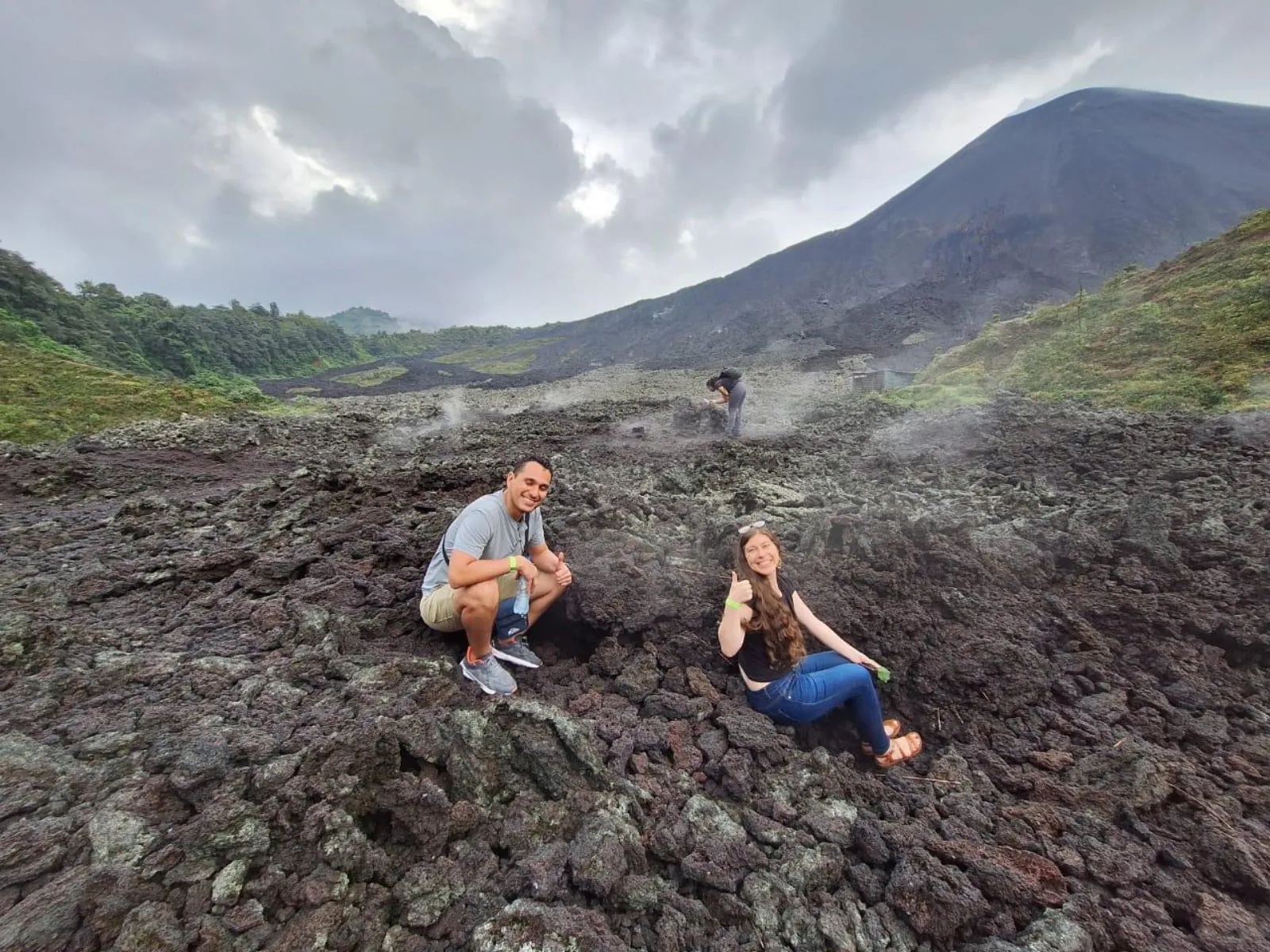
A Pacaya tour does not include the crater. CONRED’s 11 November 2026 notice tells visitors not to climb the Mackenney cone’s crater, because the gases harm health, and not to walk near lava flows or the fissures on the west flank, where the ground can break. Treat any offer to “walk on lava” with suspicion.
Most visitors need no night here. The From Antigua: Pacaya Volcano Tour in English/Spanish costs from US$23, is rated 4.5/5 from more than 1,400 reviews on GetYourGuide and takes about six hours with hotel pickup in Antigua; the Q100 park fee is extra. Compare it with Acatenango in Pacaya or Acatenango to see lava.
Which base for each volcano
| Goal | Base | Time to allow | Check first |
|---|---|---|---|
| See Fuego erupt from Acatenango | Antigua | Two days for the overnight trek, plus the hotel nights around it | Visibility and access vary; climbing Fuego is banned |
| Acatenango summit | Antigua | Two days, the usual format | Altitude, cold and a hard climb; check the park is open |
| Pacaya’s lava fields | Antigua or Guatemala City | About six hours from Antigua | Crater and lava-flow areas are off limits |
| Wake up to volcanoes over water | Lake Atitlán | Two to four nights | A lake stay is not an eruption trip |
| Hike San Pedro | Lake Atitlán, often San Pedro village | One full day, plus spare time | A local guide and current trail-security advice |
| Hike Santa María | Quetzaltenango | One long day, plus a buffer | High and strenuous; stay out of Santiaguito’s restricted zone |
| Tajumulco | The western highlands, often planned from Xela | Several days of planning | Road, security, access and operator arrangements |
Can you see Fuego erupt from your hotel?
Sometimes, but don’t book on a promise of lava. Fuego can be erupting behind solid cloud, and which way your room faces matters as much as the weather. In Antigua, the symmetrical cone in many hotel photos is Agua, not Fuego, and a “volcano view” rooftop may have no line of sight to Fuego at all.
Before you pay extra for a view, ask the hotel:
- Which volcano is visible from the room or terrace: Agua, Fuego or Acatenango?
- Is the view from my room category, or only from a shared terrace?
- Which way does the room face, and can you send a recent, unedited daytime photo of the view?
- Can I use the terrace after dark, when Fuego’s glow can show on a clear night?
- Do buildings, trees or seasonal cloud usually block it?
An old rooftop photo of Fuego does not prove the cheapest room has that view today. For a reliable look at the glow, an Acatenango overnight puts you about 3 km from Fuego’s summit; from town, the Antigua: Hobbitenango Eco-Park & Cerro de la Cruz Tour, from US$35 and rated 4.7/5 from more than 80 reviews on GetYourGuide, takes you to two lookouts that face Fuego from a distance. Our Antigua page lists the hotels that name Fuego in their view, and seeing Fuego from Antigua covers the free viewpoints.
How many nights to book: sample trips
Four nights: Antigua and one Acatenango overnight
- Nights 1 and 2, Antigua: arrive, sleep in the center, sort out food and warm gear, and spend time at 1,545 m before the climb. The second night also leaves a spare day if cloud or a closure moves your date.
- Night 3, Acatenango camp, only if the park is open: join your operator and sleep at its camp. If the hike can’t run, stay in Antigua and do Pacaya or a lookout tour.
- Night 4, Antigua: you are back around noon. Shower, eat and sleep; don’t book a long transfer for the afternoon you come down.
This avoids the most common mistake: a tiring descent and a tight airport or lake transfer on the same day.
Six nights: Antigua plus Lake Atitlán
- Nights 1 to 4, Antigua: the four-night plan above, or Pacaya and the lookouts if you skip the overnight.
- Nights 5 and 6, Lake Atitlán: take a daylight shuttle to Panajachel and settle into your village. Watch the volcanoes at sunrise, eat well and add a guided walk only if local conditions allow. Add a third night if you can.
Count the camp night separately from your hotel nights. Keep your Antigua room for the trek night only if you want to leave your belongings there and accept the cost.
Eight to ten nights: a volcano-focused route
Start with Antigua (four nights, including the trek), continue to Lake Atitlán (two or three nights) and add Xela (two or three nights) if you are an experienced hiker and current security advice supports it. Leave a buffer before your flight. This gives you rest between climbs, which matters more than fitting several volcanoes into consecutive days.
Hotels, hostels or lodges: what to pay for
| Type | What you get | What to check | Best use |
|---|---|---|---|
| Central Antigua boutique hotel | Comfort, restaurants nearby, often a quiet courtyard | Night noise, hot water, luggage storage, pickup point | The nights before and after a trek |
| Antigua hostel | Social scene, tour contacts, lower room cost | Dorm quiet hours, storage security, whether the hostel only sells its own tours | Solo and budget travelers |
| Apartment or guesthouse | Space, a kitchenette, room for a group | Check-in times, transport, who handles luggage | Families and longer stays |
| Lake Atitlán lodge | Views and a slow pace | Boat access, stairs, which rooms face the water | Rest and photography |
| Xela guesthouse or homestay | Local life and a base for longer stays | Heating or blankets, hot water, early departures | Highland hikes and language study |
| Acatenango camp | Sunset and night views toward Fuego, sunrise access | Permission, sleeping setup, cold protection, toilets, rescue plan | One trek night, not a hotel stay |
What volcano-base rooms cost
No single average price makes sense here: a hostel dorm, a boutique hotel in Antigua, a lake lodge and a trek camp are different products, and rates change with holidays, weekends and cancellation terms. Compare the total for your actual dates. Our Antigua page lists room prices from hostel to spa hotel.
Check whether the price includes taxes and service charges, breakfast, transfers and any minimum stay. An overnight trek can add separate costs for transport, the park fee, food, warm clothing, porters and the camp, so the cheapest tour on a listing is not always the cheapest like-for-like trip.
Save money with an ordinary, comfortable Antigua hotel around the trek. You’ll be on the mountain on the night a Fuego-view room matters most, and no room guarantees a sighting.
The best season for a volcano trip
November to April is usually the drier season, with better odds of clear mornings and long views. December to February brings cold nights at altitude. May to October is wetter, with more cloud, muddy trails and weather cancellations; November is a changeover month. Month-by-month detail is on our page about the best time to see Fuego.
These are tendencies and guarantee nothing about access. A blue-sky day in Antigua can come with dangerous volcanic activity, and a quiet volcano can come with terrible hiking weather, so check both the weather forecast and the latest volcano notices.
Holidays and weekends fill faster than weekdays. Free cancellation is useful when your main plan depends on weather and safety rules.
Getting between the bases
- Guatemala City airport to Antigua: about 1 to 1.5 hours by road, longer at rush hour. Pre-book a transfer if you land at night.
- Antigua to Panajachel: a tourist shuttle takes several hours, depending on traffic, roadworks, weather and stops; the boat to another village adds more. Ask the shuttle company for its current timetable and price.
- Panajachel to Xela: shuttles run less often than on the Antigua route. Confirm the operating days, any passenger minimum and the pickup point.
- Antigua to the Acatenango trailhead: your operator picks the departure point and route, so ask your tour for the time; a map app will not know it.
- Around Lake Atitlán: public lanchas connect the villages, but hotel docks, boat hours and rough afternoon water all matter. Ask your hotel which pier to use and how to arrive with luggage.
Don’t plan around the shortest possible journey time. A two-hour delay is easier to absorb when you aren’t racing for an international flight.
Safety, trail access and insurance
Fuego’s eruptions throw out ash, falling rock and pyroclastic flows, and Santiaguito has dangerous active areas. A well-reviewed hotel does nothing about those risks.
Before you confirm a trek:
- Read the latest CONRED and INSIVUMEH notices; an operator’s social media post can be out of date.
- Ask the guide which trail, viewpoint and camp are in use and whether the authorities allow them now.
- Walk away from any operator offering to ignore closures, enter restricted ravines, approach active craters or touch lava.
- Choose an operator with a weather and volcano cancellation policy, a group plan, emergency communication and a realistic descent plan.
- Read your government’s travel advice, such as the UK FCDO’s Guatemala regional risks; it can affect your insurance.
- Check that your travel insurance covers guided trekking at your planned altitude, volcanic activity, search and rescue, and medical evacuation.
- Prepare for altitude and cold. Fitness does not prevent altitude sickness; if symptoms worsen, stop climbing and get help, because descent may be needed.
After Fuego’s August 2026 eruption the Acatenango park closed for several days, and CONRED’s November 2026 advice repeats the hazards on active volcanoes. Status changes, so this page does not claim that any route or camp is open on your travel date.
Five questions to choose your base
- Which volcano do you want? Watching Fuego erupt, climbing Acatenango, walking Pacaya’s lava fields, looking at Atitlán’s peaks or climbing in the western highlands are different trips.
- Is the route open? Confirm access and weather before you book a nonrefundable hotel for a single excursion.
- Does the tour start from that town? “Near Fuego” on a map does not mean an easier pickup than Antigua.
- What will you need after the hike? A hot shower, a late checkout, clean clothes and a quiet night matter more than a photogenic roof.
- What is the full cost? Add room, transfers, guides, gear, entry fees, cancellation terms and any hotel nights you won’t use.
Bases by type of traveler
- First visit: central Antigua.
- Couple after big scenery without a hard climb: Lake Atitlán, with Antigua as the town stop.
- Solo traveler joining an Acatenango group: an Antigua hostel or small guesthouse; vet the operator yourself.
- Experienced hiker after harder climbs: Xela, if local security and access support the route.
- Family with young children: Antigua for easy rooms, with outings chosen by age and ability; a cold, high overnight trek is hard on children.
- Photographer after volcano silhouettes at sunrise: Lake Atitlán, plus an Acatenango overnight for Fuego when the weather allows.
- Short layover: a Guatemala City airport hotel with a confirmed transfer.
Choose Antigua for access, Lake Atitlán for views, Xela for hard highland hikes and Guatemala City for flights. Then let the official status and the weather decide whether the hike goes ahead, and check your tour’s dates early because camps fill on weekends and holidays.
Frequently asked questions
What is the best place to stay in Guatemala for volcano hiking?
Antigua Guatemala, for most visitors. It has the widest mix of rooms, food, tour offices and transport, and the Acatenango and Pacaya tours on this site pick up there. Plan more specialized highland hikes from Xela or Lake Atitlán.
Should I stay in Antigua or Lake Atitlán for Acatenango?
Stay in Antigua, where the pickups are. Lake Atitlán is better for waterside volcano views and slower travel; go there after the trek.
Is there a hotel on Fuego Volcano?
No. Fuego is an active volcano with restricted areas, and climbing it is banned. Hotels sold as “Fuego hotels” are in Antigua or the surrounding towns; ask for the exact location and which volcano you can see.
Can I stay overnight on Acatenango?
Yes, on a guided two-day trek with a camp at about 3,400 to 3,750 m, when the park is open. Check the camp’s permission and conditions before you book, and expect a cold, basic night.
Which Antigua hotels have a view of Fuego?
Some hotels name Fuego in their terrace or room view, but the room category and roof access matter. Confirm the volcano, the sightline and a recent photo with the hotel; many famous Antigua views show Agua.
Is Lake Atitlán a good place to see an erupting volcano?
No. The lake is lined by volcanoes, but they are not the ones that erupt for visitors. For Fuego, book an Acatenango overnight from Antigua.
Can I do Pacaya from Guatemala City?
Yes, some guided Pacaya tours collect from Guatemala City as well as Antigua. Confirm the pickup point, travel time, what the walk includes and that the crater stays off limits.
Which is the cheapest Guatemala volcano base?
No base is cheapest across the board. Antigua has many budget hostels, and Xela and some lake villages have inexpensive guesthouses. Compare the total including transport and tours, since the room price alone misleads.
How many nights do I need in Antigua before hiking Acatenango?
Two nights before the hike, plus the night you come down. Antigua at 1,545 m gives your body a start before camps at about 3,400 to 3,750 m, and the spare day covers cloud, a closure or a late flight. Don’t book a flight for the afternoon after the descent.
Is Xela worth staying in for volcano hiking?
Yes, for experienced hikers interested in Santa María and the western highlands, when local conditions allow. It is a long way from the Acatenango pickups in Antigua and colder than most of Guatemala.
Is it safe to hike a volcano in Guatemala in 2026?
It depends on the volcano, the trail, current activity, security, weather, your guide and your preparation. CONRED issued hiking safety advice on 11 November 2026. Check CONRED, INSIVUMEH and your travel advisory just before you go, and never enter closed areas.
What is the best time of year to book volcano-view accommodation?
The drier months, roughly November to April, give better odds of clear views, with very cold nights on the mountain. No month guarantees an eruption or a cloud-free sky.
Can I book a hotel near the Acatenango trailhead instead of joining a tour?
You can, but you still need permission, current route conditions, a guide, transport and an emergency plan. A night near the trail does not replace any of them or make a high hike safer.
Do I need a hotel for the night of my overnight trek?
Usually not, because the trek includes the night at camp. Check what’s included and where your bags will be. Some travelers keep their Antigua room for luggage or a partner who isn’t hiking, at extra cost.
Pick Your Night Facing Fuego
The A-frame cabin overnight is rated 4.5 from 1,040+ reviews on GetYourGuide, with free cancellation up to 24 hours before. Check Fuego's latest activity and the park status the day before you go.
Check Dates & Tour Options