"Hike was amazing, logistics were taken care of and they had gear for rent if you didn’t have any. It was not easy but absolutely worth it"
Daily official bulletin
Is Fuego Erupting Today?
Explosions, ash and glow from the latest bulletin
From
$90
per person
Free cancellation
- 4.5 / 5 1,040+ Reviews
- 2 days, 1 night Duration
- Since 2002 Erupting Continuously
- 3,763 m Summit, per INSIVUMEH
- Free Cancellation
Latest official activity · INSIVUMEH
Fuego's Latest Bulletin
Erupting: 3–6 explosions an hour
Bulletin of , published 8:03 a.m. Guatemala time
This bulletin is more than two days old. Open INSIVUMEH's bulletin page below for the latest report before you plan around it.
- Explosions
- 3–6 per hour
- Ash column
- 4,500–5,000 m above sea level
- Ash drift
- 10–40 km to the northeast and east
- Glowing rock
- 100 m above the crater
In Guatemala now
Crater weather at bulletin time: Partly cloudy, wind from the southwest.
- Acatenango: Open with a licensed operator since the park reopened on 7 August 2026 (Q100 entry for foreign visitors).
- Climbing Fuego: Prohibited. The Acatenango municipality banned the ridge route on 1 April 2026, and Article 19 of CONAP Resolution 01-15-2026 (14 July 2026) bans tourist visits to Fuego.
- Access checked 13 November 2026. Closures can come with little notice; confirm with your operator and CONRED on the day.
Read the bulletin (PDF, Spanish) INSIVUMEH volcano cameras Live cams
These are dated observations from Guatemala's volcanology institute, not a forecast. Clouds can hide an active Fuego all night, and no figure here promises what you will see.
Want to watch it erupt? Camps on Acatenango face Fuego across the saddle.
Compare Acatenango Overnight ToursBook Your Night Facing Fuego
Check Dates & Tour Options
The A-frame cabin overnight puts you at a camp at about 3,700 m facing Fuego, with three meals, a bed in an A-frame cabin and a group capped at 12. Bring Q100 in cash for the park gate.
The Experience
A Night Facing Fuego from US$90
Transport from Antigua, a bilingual guide, lunch, dinner and breakfast, and an A-frame cabin at a camp that looks straight at Fuego.
Highlights
- A steady afternoon climb from La Soledad to a camp at about 3,700 m
- Fuego's eruptions in view from base camp after dark
- Sunrise over the volcanic chain from the 3,976 m summit, weather permitting
- Dinner and breakfast at a camp facing Fuego
- Gear rental and vegetarian meals arranged by WhatsApp before the hike
- Free cancellation up to 24 hours before the start
What's Included
- Round-trip transport between Antigua and the trailhead
- Bilingual guide (Spanish and English)
- Lunch, dinner and breakfast, plus hot drinks
- A-frame cabin with mattress, pillow and sleeping bag
- Guided sunrise summit hike
- Group capped at 12 participants
From the Bulletin to the Camp
Read the morning bulletin, ride out of Antigua, climb to camp and watch Fuego after dark.
Check the bulletin, then book
Look at the latest INSIVUMEH bulletin and the access notes above, then pick a date. The GetYourGuide listing gives a full refund if you cancel up to 24 hours before the start, which helps if a closure or bad weather hits your date.
Meet your guide in Antigua
The pickup point comes with your confirmation and the operator's WhatsApp group, so watch your messages the evening before. Carry Q100 in cash for the park fee and at least 3 liters of water, since neither is in the price.
Climb to a camp facing Fuego
The trail from La Soledad gains about 1,500 m on loose ash and gravel to a camp at about 3,700 m. Dinner comes as the light goes, and on a clear night you watch Fuego's explosions from camp before sleeping in an A-frame cabin.
Sunrise at 3,976 m, then down
Before dawn the guide leads the summit push to Acatenango's 3,976 m top for sunrise, weather permitting. After breakfast at camp you walk back to La Soledad and ride to Antigua.
Photo Gallery
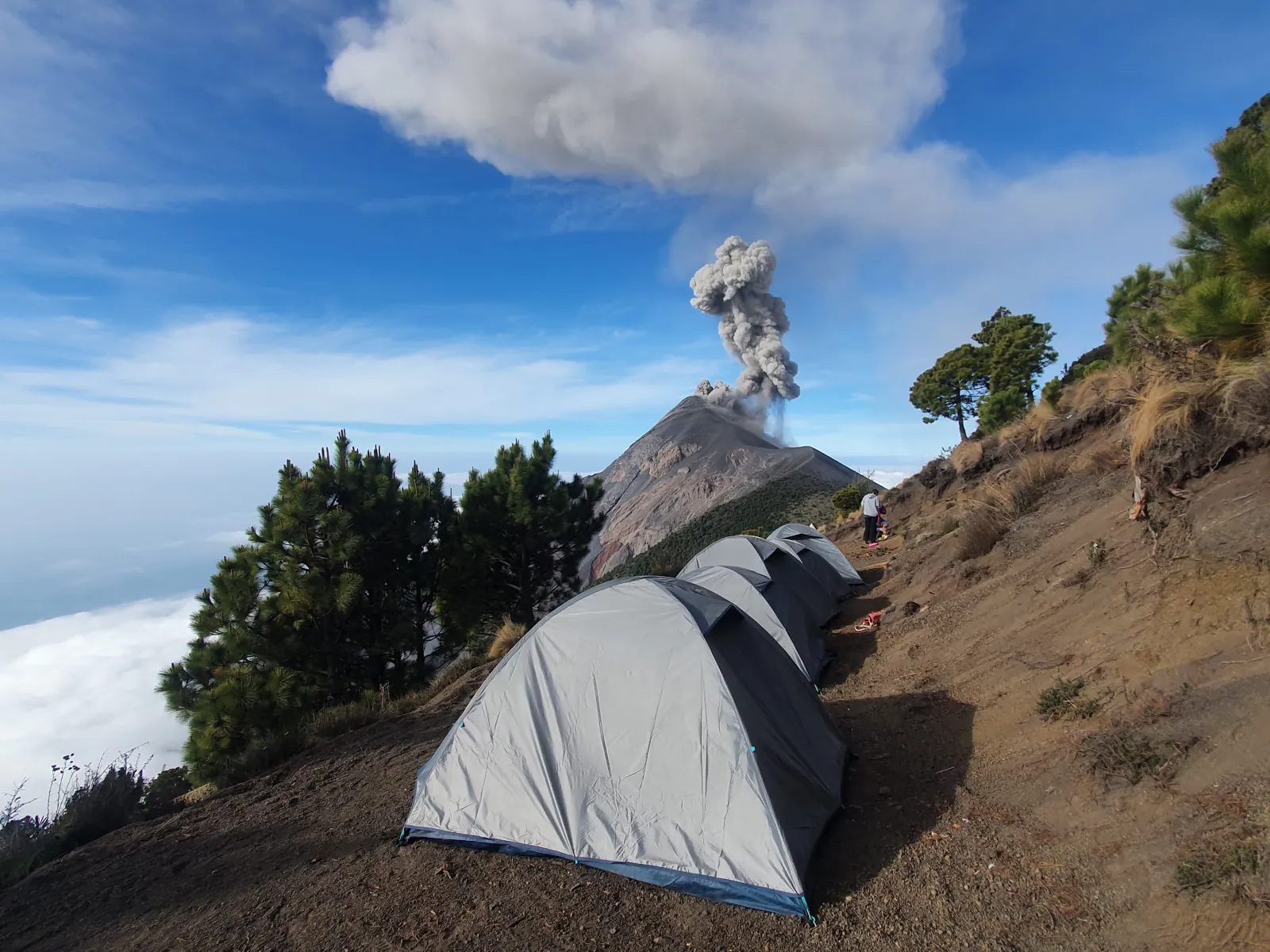
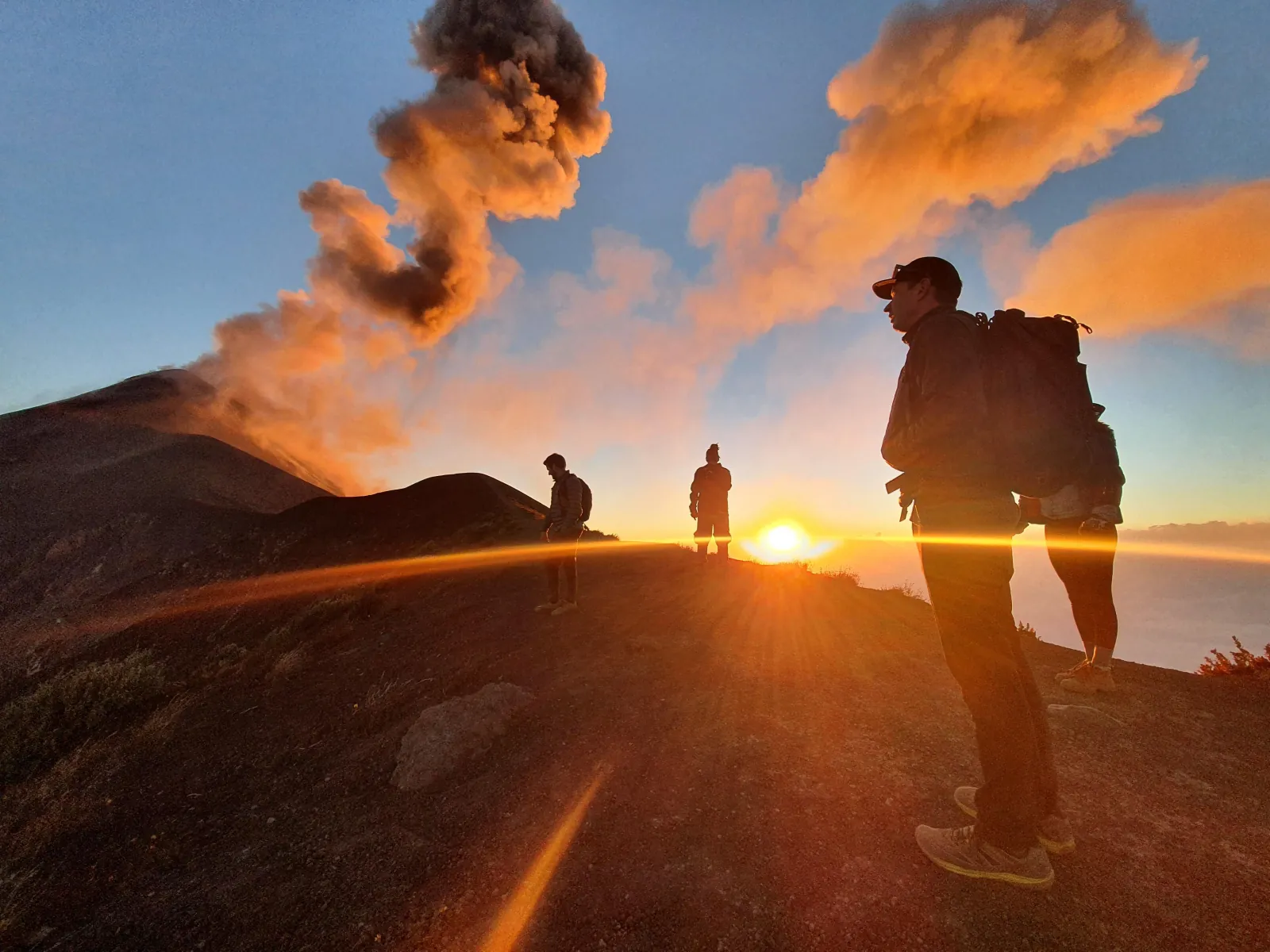
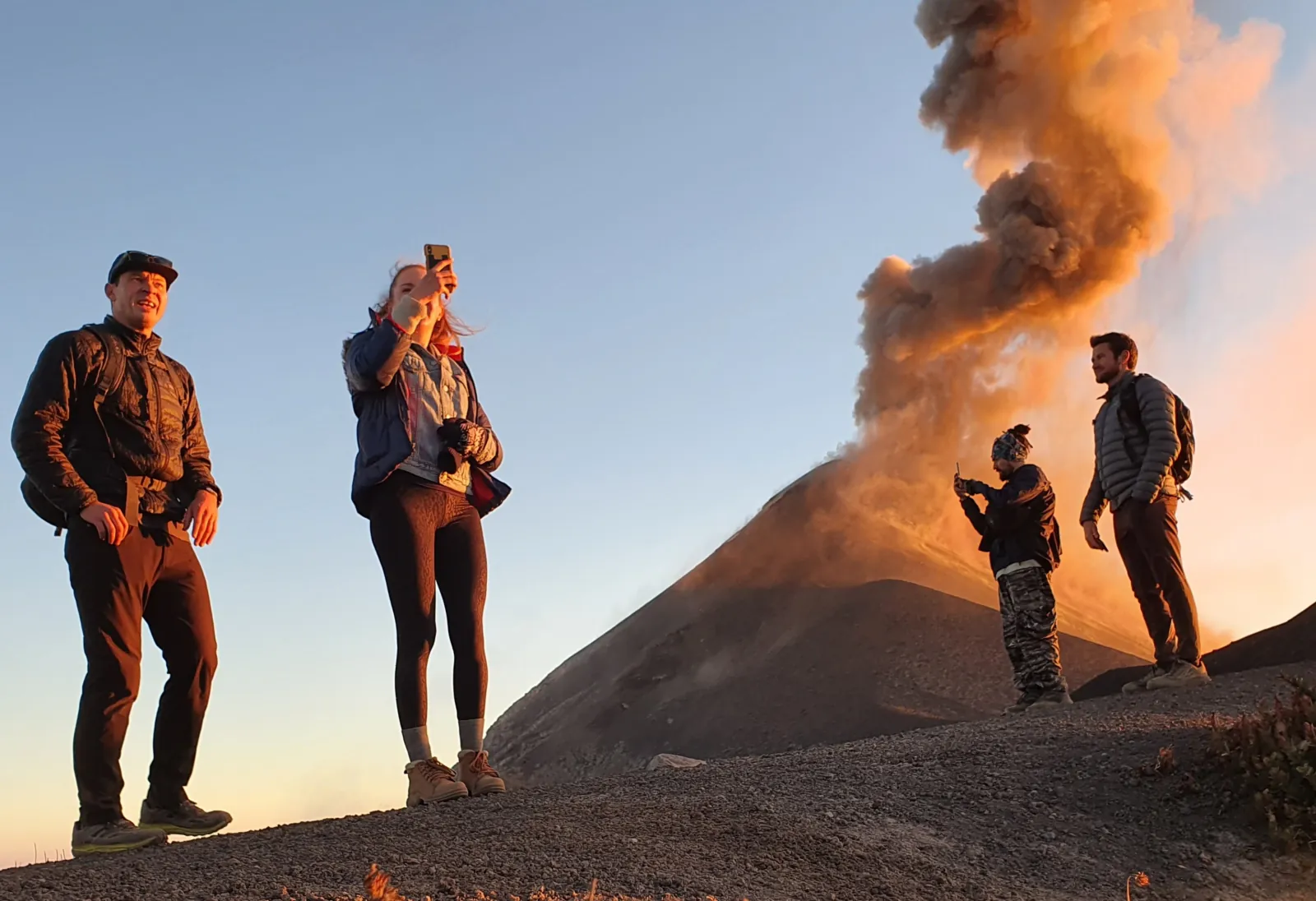
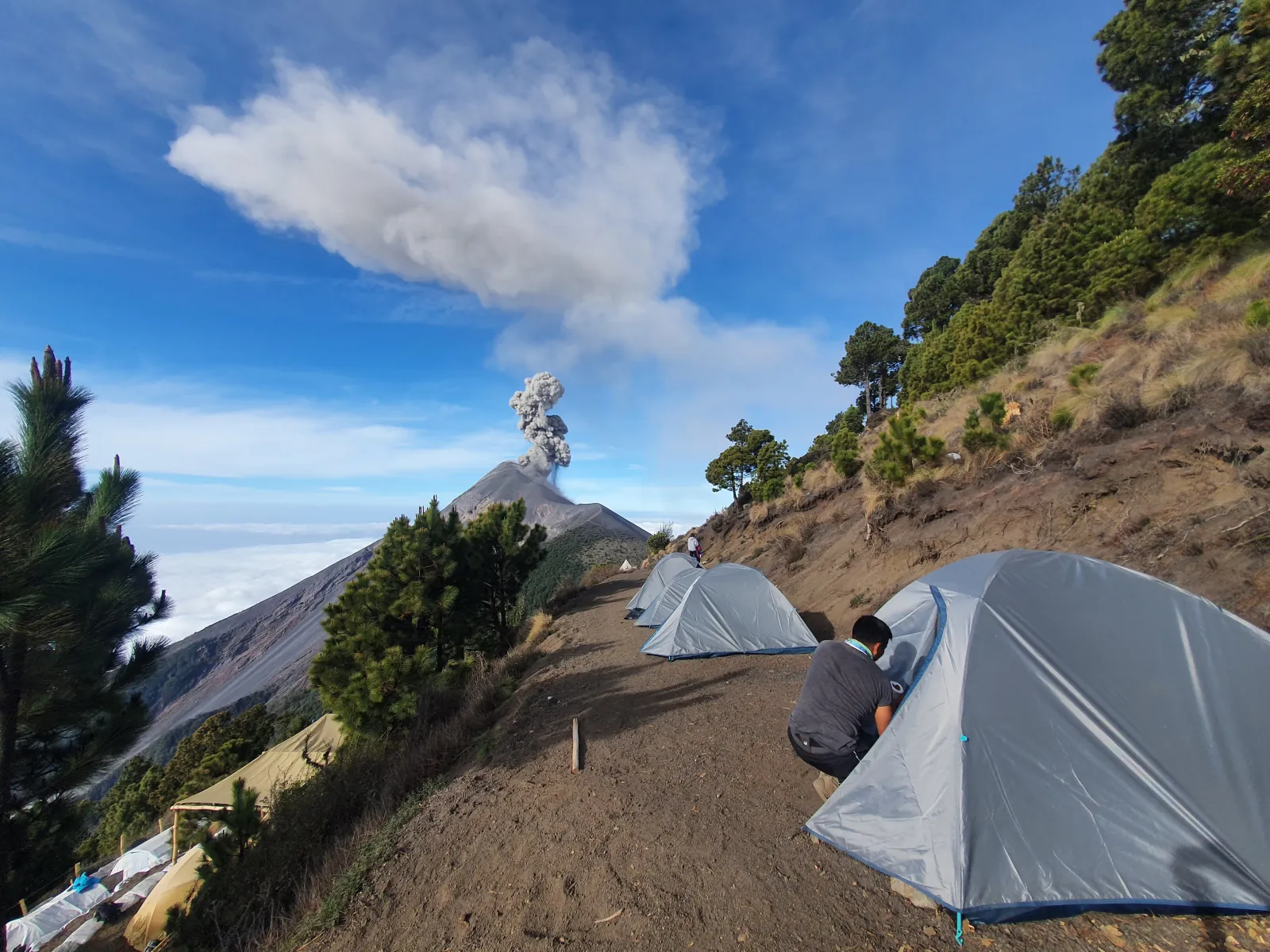
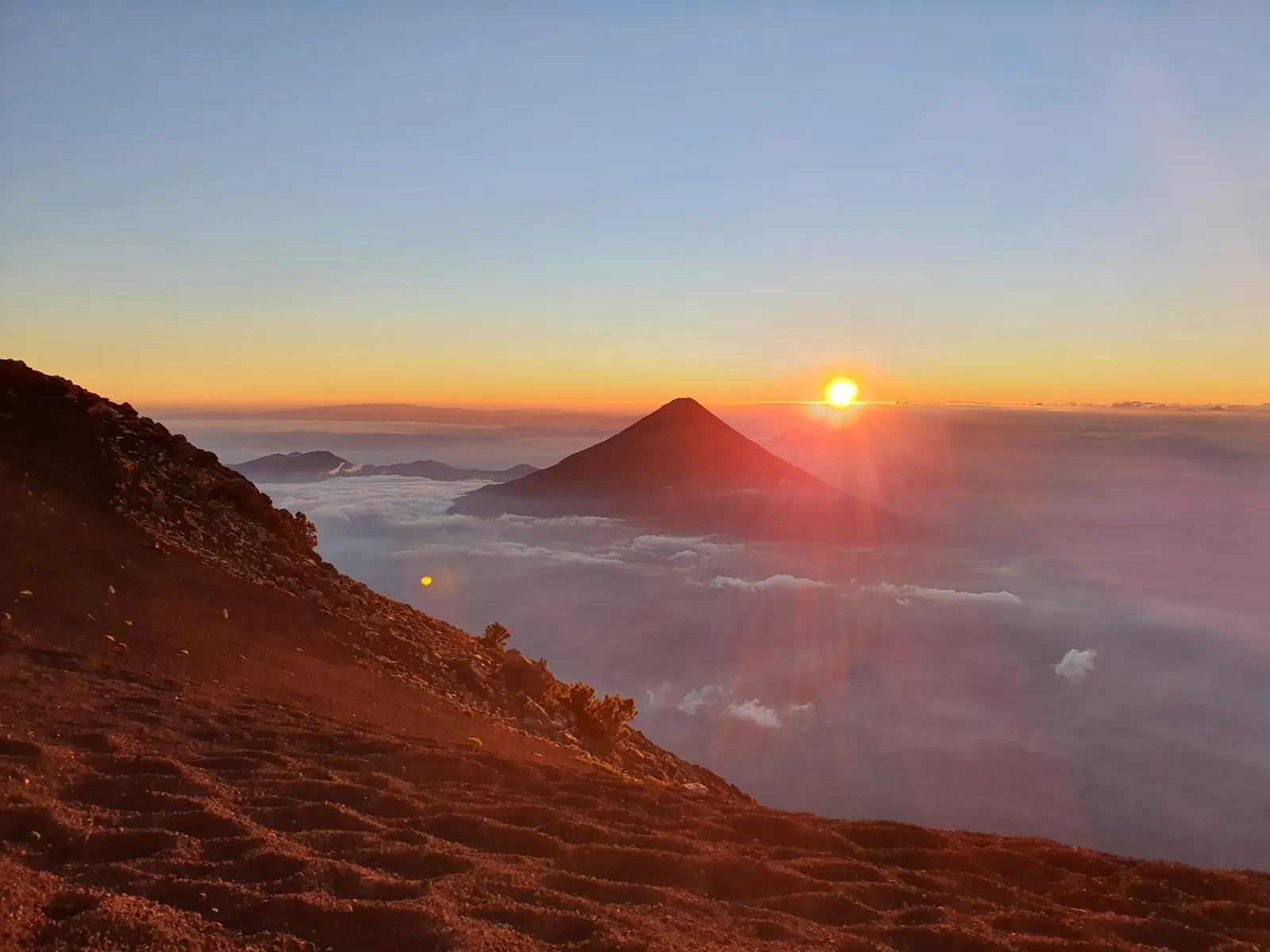
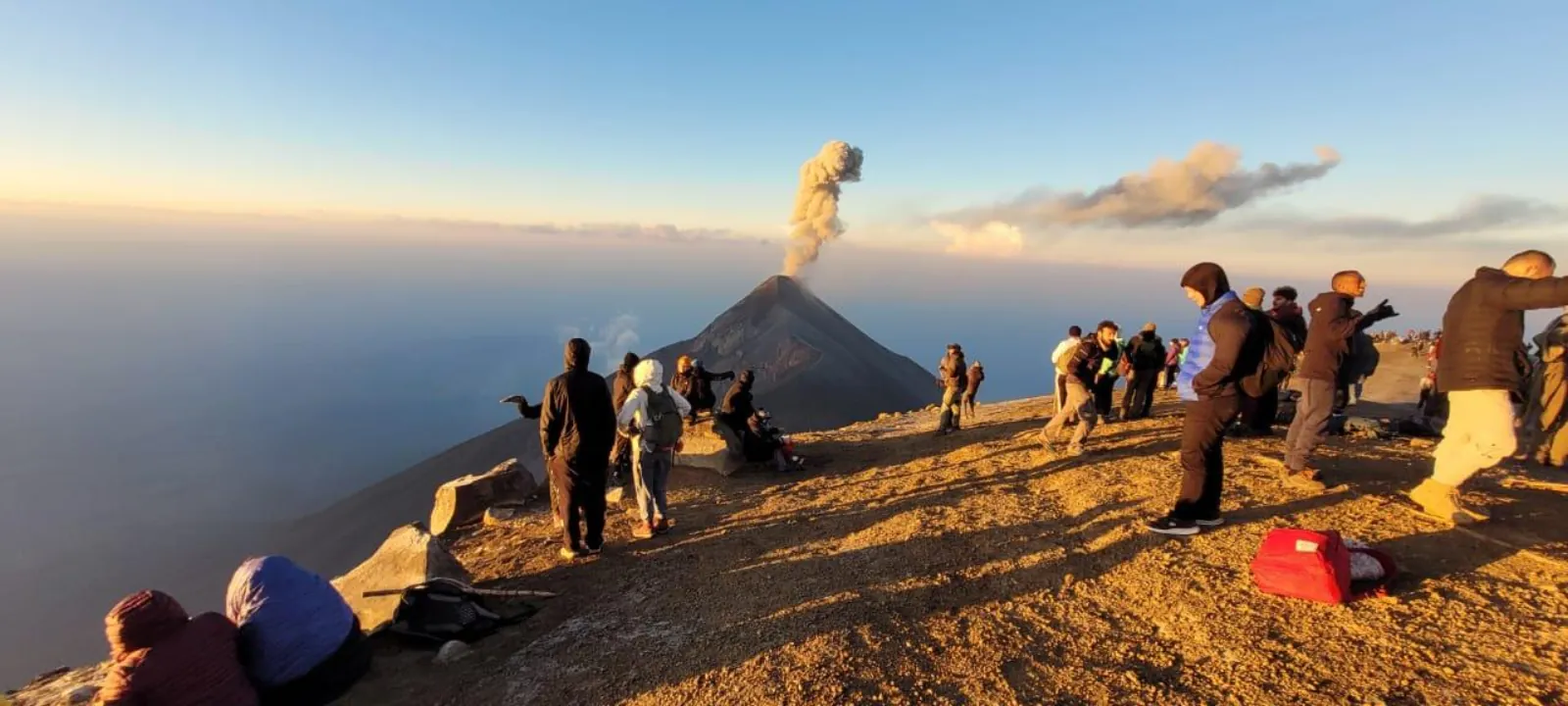
Fuego from the Acatenango Camp
Guest and operator photos from the A-frame cabin overnight.
Three Ways to See Today's Activity in Person
Two Acatenango overnights that face Fuego after dark, and a half-day on Pacaya with Fuego in the distance.
| Feature | CAMP FACING FUEGO · CAP OF 12 Acatenango Overnight Tour with A-Frame Cabins | CA Travelers Acatenango Overnight Hike | Pacaya Volcano Tour from Antigua |
|---|---|---|---|
| Price from (per person) | US$90 on GetYourGuide | US$129 on Viator | US$23 on GetYourGuide |
| Time needed | 2 days, 1 night | 2 days, 1 night | About 6 hours |
| What you see of Fuego | ✓ Eruptions from a camp at about 3,700 m on a clear night | ✓ Eruptions from a four-person cabin on a clear night | Fuego in the distance from Pacaya; Pacaya is itself active, so what you see there varies |
| A night watching Fuego | ✓ Yes | ✓ Yes | ✗ Day trip |
| Effort | About 1,500 m of climbing on loose ash | 4 to 6 hours to camp; high fitness needed | About 1.5 to 2 hours up on Pacaya |
| Park fee | ✗ Q100 cash at the gate | ✓ Included | ✗ Q100 at the entrance |
| Group size | ✓ Capped at 12 | Not stated | Not stated |
| Cancellation | ✓ Free up to 24 hours before | ✗ All sales final | ✓ Free up to 24 hours before |
| Rating | 4.5 / 5 (1,040+ reviews) | 4.8 / 5 (330+ reviews) | 4.5 / 5 (1,420+ reviews) |
| Book Now | See on Viator | See on GetYourGuide |
Other ways to see it
More Ways to See Fuego in Person
Another overnight with the park fee included, a small-group cabin trip, a half-day on Pacaya, and viewpoints above Antigua with no hike.
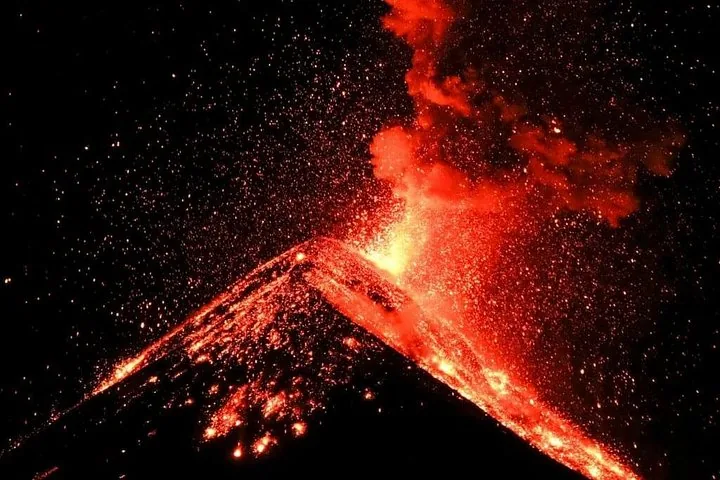 PARK FEE INCLUDED
CA Travelers Cabin Overnight (Viator)
CA Travelers' overnight Acatenango hike: about US$129 per person, 4.8/5 from 330+ Viator reviews, park fee, meals and shared 4-person cabins included.
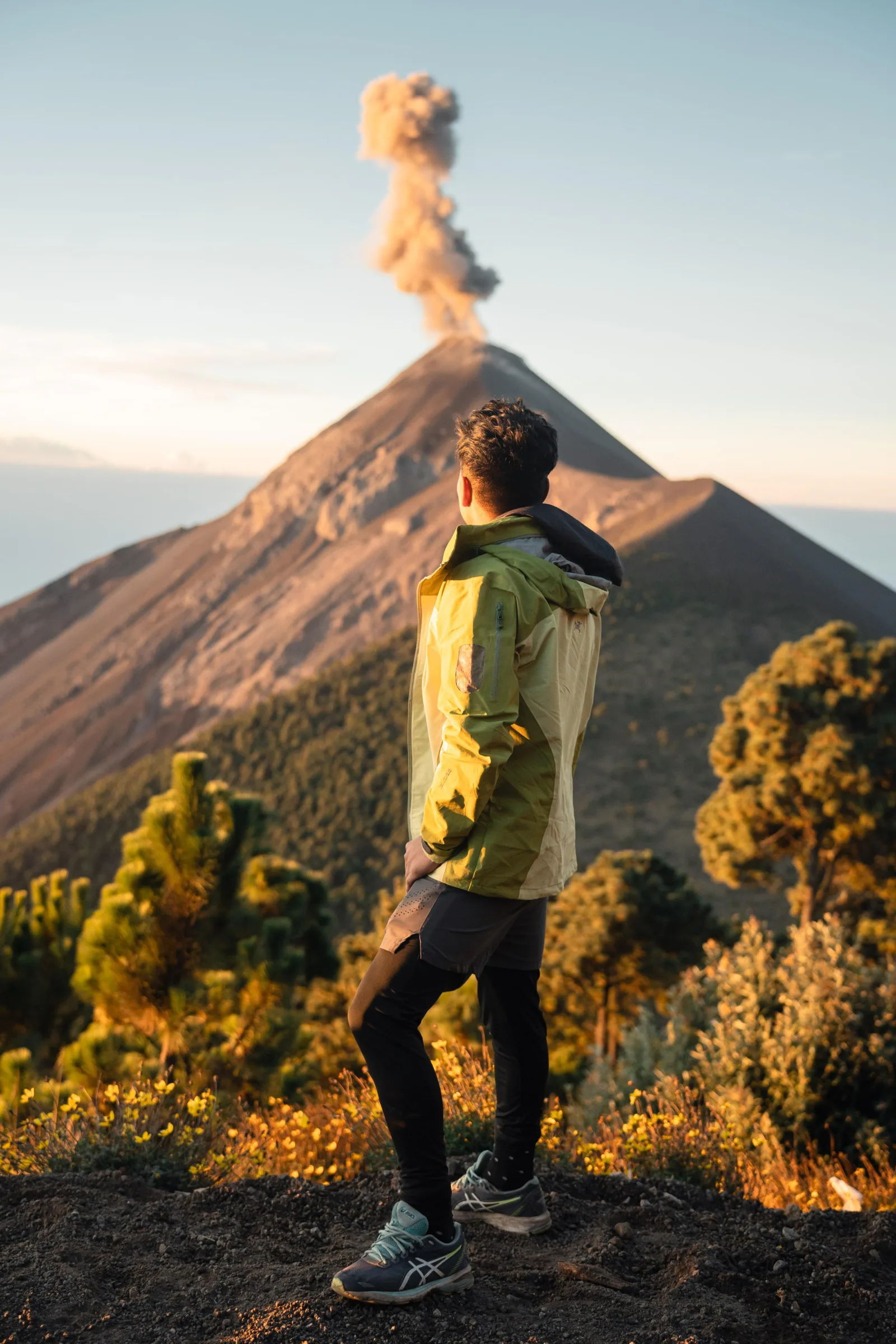 GROUP OF 6 · FEE INCLUDED
Small-Group Cabins, Fuego From Bed
Small-group Acatenango hike with 1 guide per 6 hikers, cabins and park fees included, from US$170 on GetYourGuide.
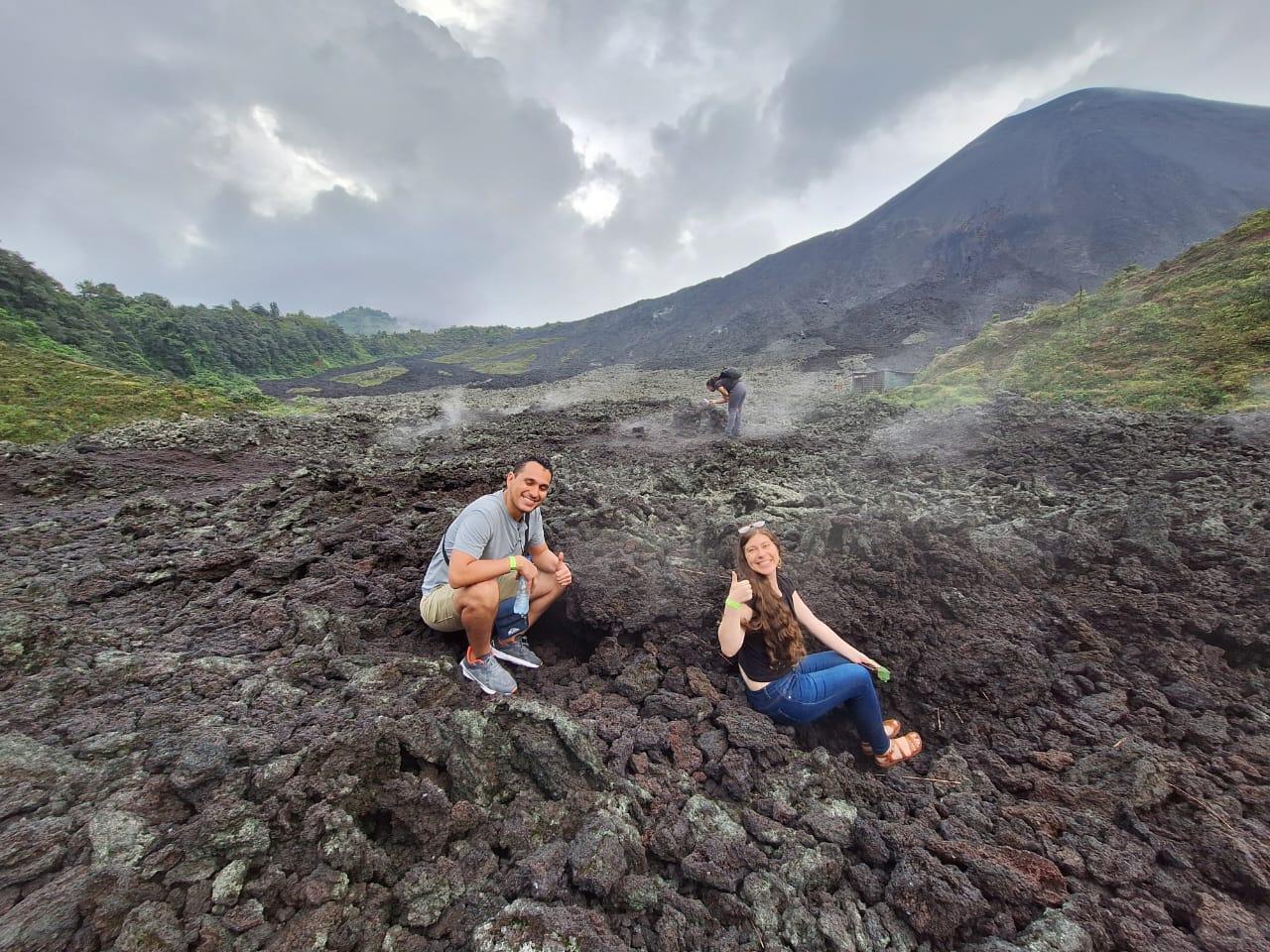 PACAYA · 6 HOURS
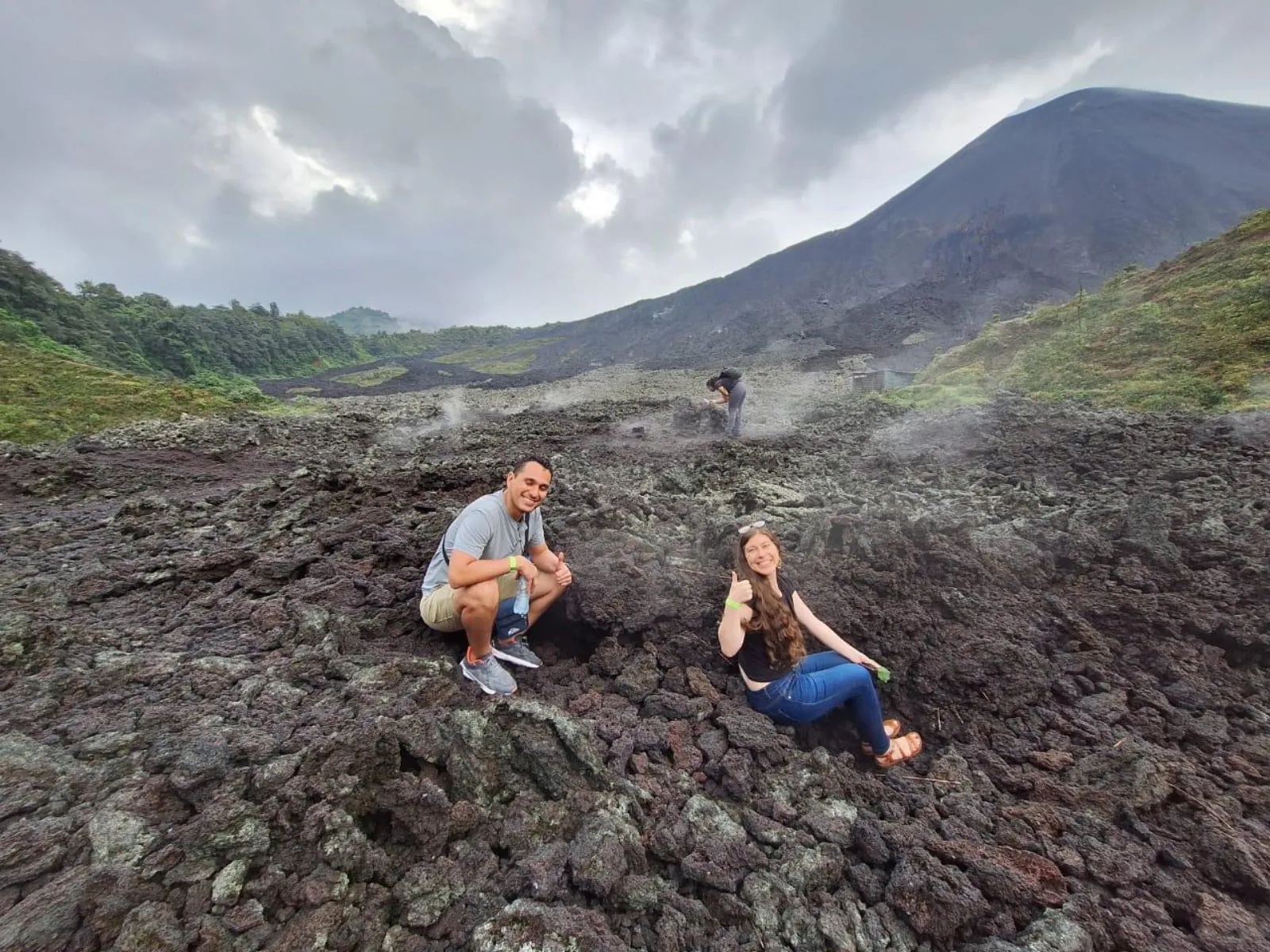
Pacaya Volcano Half-Day Hike
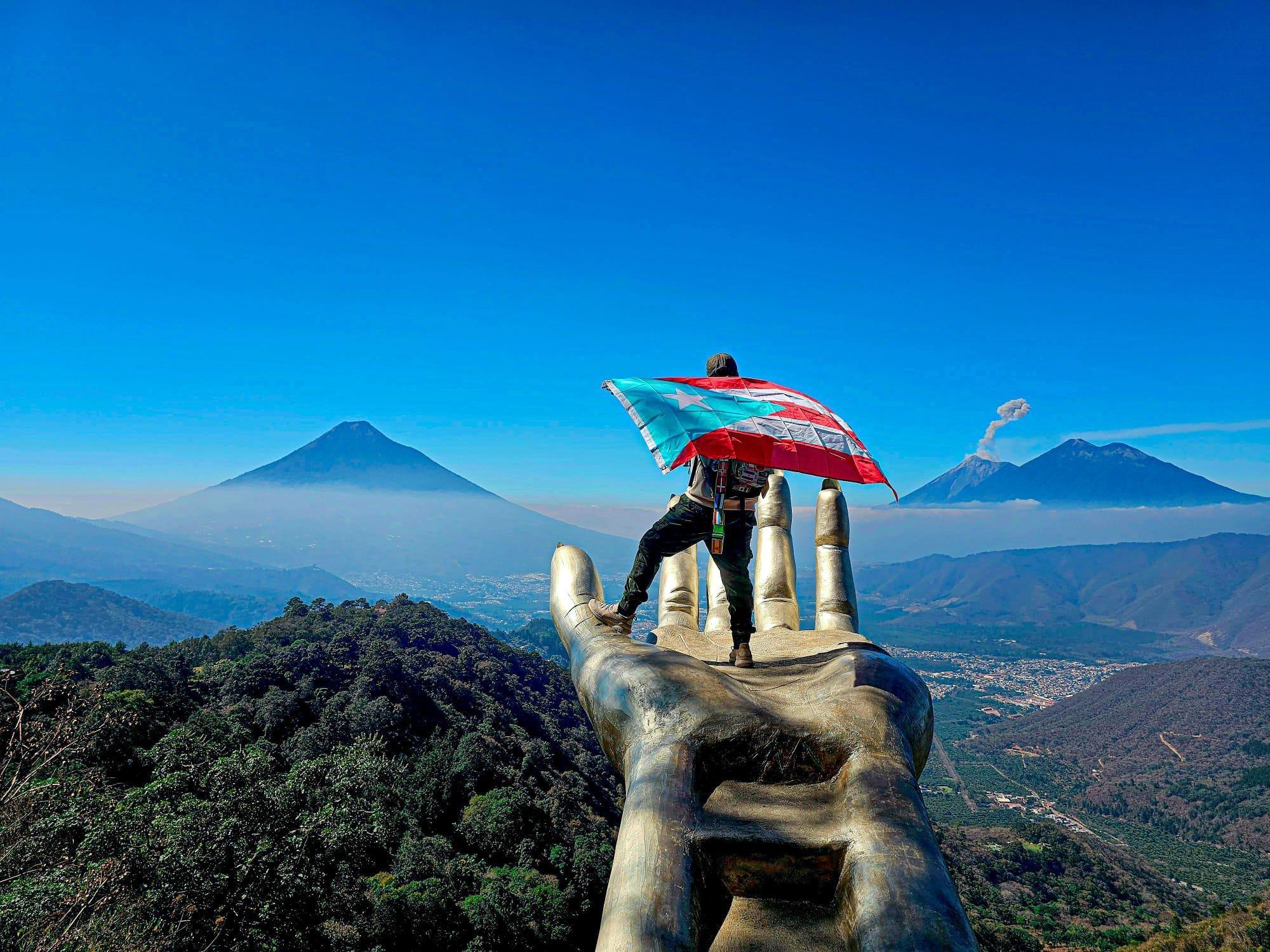 NO HIKE · VIEWPOINTS
Hobbitenango & Cerro de la Cruz
Reading the bulletin
What Today's Fuego Activity Means for You
How to read INSIVUMEH's daily bulletin, the last two weeks in one table, and what the numbers can and cannot tell you before a trip.
Yes: Fuego has been erupting continuously since 4 January 2002 (Smithsonian Global Volcanism Program), and INSIVUMEH’s bulletin of 12 November 2026 logged 3 to 6 explosions an hour. That bulletin also reported ash rising to 4,500 to 5,000 m above sea level and glowing rock thrown about 100 m above the crater. The panel at the top of this page shows the newest bulletin from INSIVUMEH, Guatemala’s volcanology institute, and changes each time a new one comes out. Below, you learn how to read it and what it means for a trip to watch Fuego with your own eyes.
Reading an INSIVUMEH bulletin, term by term
The daily bulletin is a short PDF in Spanish from the Fuego observatory (OVFGO). These are the words you will meet in it.
| Spanish term | What it means for you |
|---|---|
| Explosiones por hora (débiles, moderadas, fuertes) | Explosions counted each hour, graded weak, moderate or strong. Not every one is visible. At 3 to 6 an hour, expect a burst roughly every 10 to 20 minutes. |
| Columna de gases y ceniza, msnm | Height of the ash column in meters above sea level, not above the crater. Fuego’s summit is 3,763 m, so a 4,800 m column stands about 1 km above the crater. |
| Se desplazan hacia… a distancias de… km | The direction the wind carries the ash, and how far. |
| Caída de ceniza | Villages where fine ash is falling or expected. |
| Material incandescente | Glowing rock thrown out of the crater, measured in meters above it. This is the orange burst you see after dark. |
| Material balístico | Larger blocks hurled by strong explosions. They are the reason INSIVUMEH tells people not to stay on La Meseta, the saddle below the crater. |
| Avalanchas | Hot rock sliding down the ravines (Seca, Ceniza, El Jute, Las Lajas). Glowing ones show at night as they roll down the cone. |
| Lahares | Flows of mud and boulders in the ravines when rain soaks loose ash, most likely from May to October. |
| Retumbos y ondas de choque | Booms and pressure waves that can rattle doors and windows in nearby villages. From an Acatenango camp you see the flash, then hear the boom a few seconds later. |
| Flujos piroclásticos | Fast, hot clouds of gas and rock racing down the ravines, the hazard of big eruptions such as June 2018. |
| Visualización del cráter | Whether the observatory could see the crater. When it reports cloud, viewers nearby are often in cloud too. |
Fuego’s bulletins from 31 October to 12 November 2026
Each row is one daily bulletin. Where the bulletin gives no figure, the table says “not stated”, which does not mean Fuego was quiet.
| Bulletin | Explosions an hour | Ash column (m above sea level) | Notable |
|---|---|---|---|
| 12 Nov | 3 to 6 | 4,500 to 5,000 | Glowing rock 100 m above the crater; light ash expected on Santa Isabel and El Socorro |
| 11 Nov | 5 to 8 | 4,300 to 4,800 | Glowing rock 200 m; avalanches; clear sky |
| 10 Nov | 3 to 5 | 4,200 to 4,700 | Lahar reported; avalanches |
| 9 Nov | 2 to 4 | 4,500 to 5,000 | Glowing rock 100 m; light ash expected on Panimaché I and II and El Porvenir |
| 8 Nov | Not stated | 4,500 to 4,800 | Glowing rock 200 m; avalanches |
| 7 Nov | 3 to 5 | 4,200 to 4,700 | Ballistic rock can land more than 500 m around the crater; advice not to stay on La Meseta |
| 6 Nov | Not stated | 4,200 to 4,500 | Avalanches; ash carried 25 km south and southeast |
| 5 Nov | 4 | 4,200 to 4,500 | Glowing rock 300 m |
| 4 Nov | 1 to 3 | 4,800 | Glow reported; ash to the southwest |
| 3 Nov | Not stated | 4,200 to 4,500 | Avalanches |
| 2 Nov | 3 | 4,200 to 4,400 | Glowing rock 300 m |
| 1 Nov | Not stated | 4,800 | Glow reported; ash to the west |
| 31 Oct | 1 to 2 | 4,200 to 4,500 | Ash carried 45 km west and southwest |
Across these 13 bulletins, where a count was given, Fuego logged 1 to 8 explosions an hour. Ash columns reached 4,200 to 5,000 m, roughly 450 to 1,250 m above the crater, and glowing rock went 100 to 300 m into the air. The Smithsonian’s weekly report for 29 October to 4 November, compiled from INSIVUMEH data, gave a similar picture: 1 to 9 explosions an hour and plumes up to 1.1 km above the summit. A slow day tells you little about the next one: the rate went from 1 to 3 an hour on 4 November to 4 on 5 November.
What the numbers mean for seeing Fuego
After dark, the figure to watch is the glowing rock. A bulletin that reports incandescence 100 to 300 m above the crater describes the orange bursts that hikers watch from the Acatenango camps. By day you see grey ash puffs rising and bending with the wind, and on a clear morning the plume stands out against the sky.
The weather matters as much as the volcano. The 12 November bulletin, with 3 to 6 explosions an hour, still called the conditions only “a little favorable” for seeing the crater because of cloud. Clouds can hide an active Fuego all night, and no explosion count can promise what you will see from camp. The bulletins in this period describe explosions, glowing rock and avalanches, not lava flows, so plan on bursts of glow and keep your expectations open.
Acatenango access and the Fuego ban as of November 2026
The Acatenango park closed from 3 to 7 August 2026 during Fuego’s eruption of 3 to 5 August and reopened on 7 August. That reopening is the latest official act on access as of 13 November 2026, so check the latest CONRED, INSIVUMEH or operator notice before you go. Climbing Fuego itself is banned: the Acatenango municipality closed the ridge route on 1 April 2026, and CONRED repeated on 9 August that the ascent is not authorized. INSIVUMEH’s bulletin of 7 November warned that ballistic rock can land more than 500 m around the crater. Can you hike Fuego? sets out every 2026 decision.
On the evening before your hike and again that morning, do three things:
- Open the newest bulletin on INSIVUMEH’s daily bulletin page.
- Check CONRED for closures or alerts.
- Read your operator’s WhatsApp messages, since they hear about closures first.
A tour with free cancellation up to 24 hours ahead gives you room to move if the news is bad. The Acatenango overnight tours compared page lists which ones offer it.
When INSIVUMEH publishes, and the weekly cross-check
INSIVUMEH’s Fuego observatory issues one bulletin a day, plus special bulletins during big events: a special bulletin on 5 August 2026 declared the end of that eruption after about 50 hours. The daily PDFs from 31 October to 12 November went up between about 6:40 and 8:10 a.m. Guatemala time. For a longer view, the Smithsonian Global Volcanism Program publishes a weekly summary built on INSIVUMEH’s reports. To look at the volcano itself, try the Fuego live cams.
Limits of a daily bulletin
A bulletin records what the observatory saw and measured. It is not a forecast, so it cannot tell you whether tonight will be busier or quieter. It is not a safety clearance either: the Acatenango municipality and CONRED decide closures, not the bulletin. And it says nothing about cloud at your camp this evening, which is why a buffer day in Antigua helps.
If the numbers make you want to see it, the A-frame cabin overnight costs from US$90 per person and is rated 4.5/5 from 1,040+ reviews on GetYourGuide (our review). Some lower-rated reviews describe a disorganized start and a guide with little English, so confirm both with the operator. We earn a commission if you book through our links, at no extra cost to you.
Guest Reviews
What A-Frame Overnight Hikers Say
4.5/5
from 1,040+ verified hikers
Ratings and review counts are each platform's own figures (GetYourGuide or Viator) as of November 2026 and change day to day.
"This was overall a great experience. Aiden and Anderson and our porter were so kind friendly and tried their best to accommodate us with everything and made sure we were safe through the whole hike. Small group (ours was less than 15) accommodation was good for the price. Fuego isn’t included as it’s mentioned but worth doing it since you’re there already. Definitely do the sun rise"
"An incredible hiking experience! The guide team was patient and accommodating with all the rest stops along the way. to finish the hike. The meals provided were good and supplied the exact energy boost needed for the trek. I want to give a special shoutout and thank you to William, the porter that helped me with my bag. In addition, he was a huge source of support when I struggled with anxiety and breathing issues during the climb. His calm presence and guidance made all the difference in getting me down."
"Amazing experience these guys have your best interests at heart and are just gems. You do have to be fit and prepared for a real challenge though."
"Emerson was a very good guide and very patient with the people. His very helpful and trustworthy"
"Excellent experience guides were helpful especially with giving breaks . I highly recommend this tour"
Read all 1,040+ verified reviews
See All ReviewsWatch Fuego from Acatenango
Rated 4.5/5 from 1,040+ reviews on GetYourGuide, from US$90 per person, with free cancellation up to 24 hours before. Eruptions and clear skies are never guaranteed. Starting from $90 per person.
Check Availability & BookCan't Make These Dates?
Browse More Available Options
Other tours for seeing Fuego from Antigua, each with its own review and booking link.
Fuego Today: Questions
Eruptions, lava, safety and where to find the newest official bulletin.
Yes. Fuego has been erupting continuously since 4 January 2002, according to the Smithsonian Global Volcanism Program. INSIVUMEH's bulletin of 12 November 2026 logged 3 to 6 explosions an hour, with ash rising to 4,500 to 5,000 m above sea level. The panel at the top of this page shows the newest bulletin and its date.
Every day, in bursts. INSIVUMEH's daily bulletins from 31 October to 12 November 2026 logged between 1 and 8 explosions an hour where a count was given, and the Smithsonian's weekly report for 29 October to 4 November gave 1 to 9 an hour. At 3 to 6 an hour you can expect a burst roughly every 10 to 20 minutes, though not every one is visible.
You may see glowing rock, but nobody can promise it. The bulletins of early November 2026 reported incandescent rock thrown 100 to 300 m above the crater on many days, which shows as orange bursts after dark. They did not describe lava flows. Cloud can hide an active Fuego all night, so treat any night as a chance, not a guarantee.
Climbing Fuego is banned, and INSIVUMEH's bulletin of 7 November 2026 warned that ballistic rock can land more than 500 m around the crater. Watching it from the Acatenango camps across the saddle is a different matter, though cold, altitude and the steep climb are real risks there. Acatenango reopened on 7 August 2026 after a closure; check CONRED, INSIVUMEH and your operator on the day. Is Fuego safe to visit?
Read INSIVUMEH's daily bulletin on insivumeh.gob.gt, which this page summarizes at the top, and check conred.gob.gt for closures or alerts. Your tour operator usually posts closure news on WhatsApp. The INSIVUMEH camera viewer shows what the volcano looks like right now. Fuego live cams.
Early in the morning. The daily bulletins from 31 October to 12 November 2026 went up between about 6:40 and 8:10 a.m. Guatemala time. During big events INSIVUMEH also issues special bulletins, such as the one on 5 August 2026 that declared the end of that eruption.
No. When a bulletin gives no explosion count, the figure simply was not stated, and a low count one day says little about the next: the rate went from 1 to 3 an hour on 4 November 2026 to 4 an hour on 5 November. A bulletin is a record of what the observatory saw, not a forecast.
Still have questions? Email us at info@fuego-volcano.com
Keep Exploring
Explore More
Every status page, guide and tour review on the site.
Fuego Today & Planning
Tour Reviews
- Acatenango A-Frame Cabin Overnight Review: Fuego View
- Brothers Expeditions Acatenango Overnight: Review
- CA Travelers Acatenango Overnight Review (Viator)
- Hobbitenango & Cerro de la Cruz Tour: Review
- Marvelus Pacaya Volcano Trek: Review
- Small-Group Acatenango Eruption-View Cabins: Review
- Volcano Expeditions Acatenango Overnight Review
- Volcano Expeditions Pacaya Tour: Review