"Once in a life time experience, and also one of the hardest things I’ve ever done. I got to witness one of the most stunning sights available on the planet. The tour and tour guides were wonderful, but be prepared for a grueling hike, and some harsher conditions as you summit the volcano."
Months and hours
Best Time to See Fuego
Dry nights, dark hours and a spare day
From
$57
per person
Free cancellation
- 4.4 / 5 1,800+ Reviews
- 2 days, 1 night Duration
- Dec–Feb Driest at the Summit
- After Dark Best Hours for Glow
- Free Cancellation
Book Your Night Facing Fuego
Check Dates & Tour Options
Volcano Expeditions picks you up at your Antigua hotel, feeds you three meals and puts you in a dome or cabin at a camp facing Fuego, from US$57 per person. Its listing also sells an extra Fuego hike for Q200: that climb is banned, so do not book it.
The Experience
What Volcano Expeditions Includes
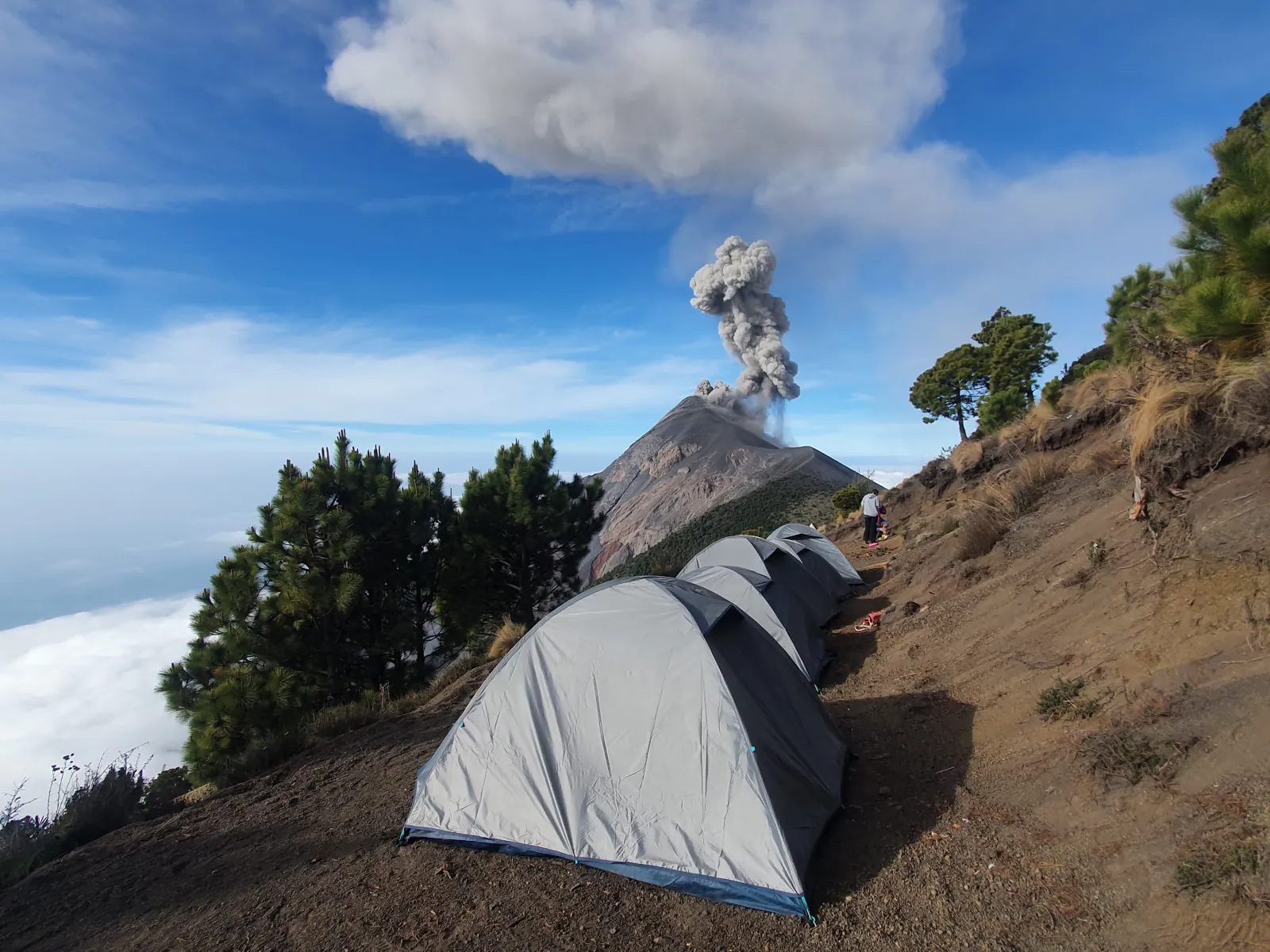
Hotel pickup and drop-off in Antigua, a dome or cabin with sleeping bag and mat, three meals with hot chocolate, a loaned hat, gloves and jacket, and luggage storage.
Highlights
- A 4.5- to 6-hour climb from La Soledad to a camp facing Fuego
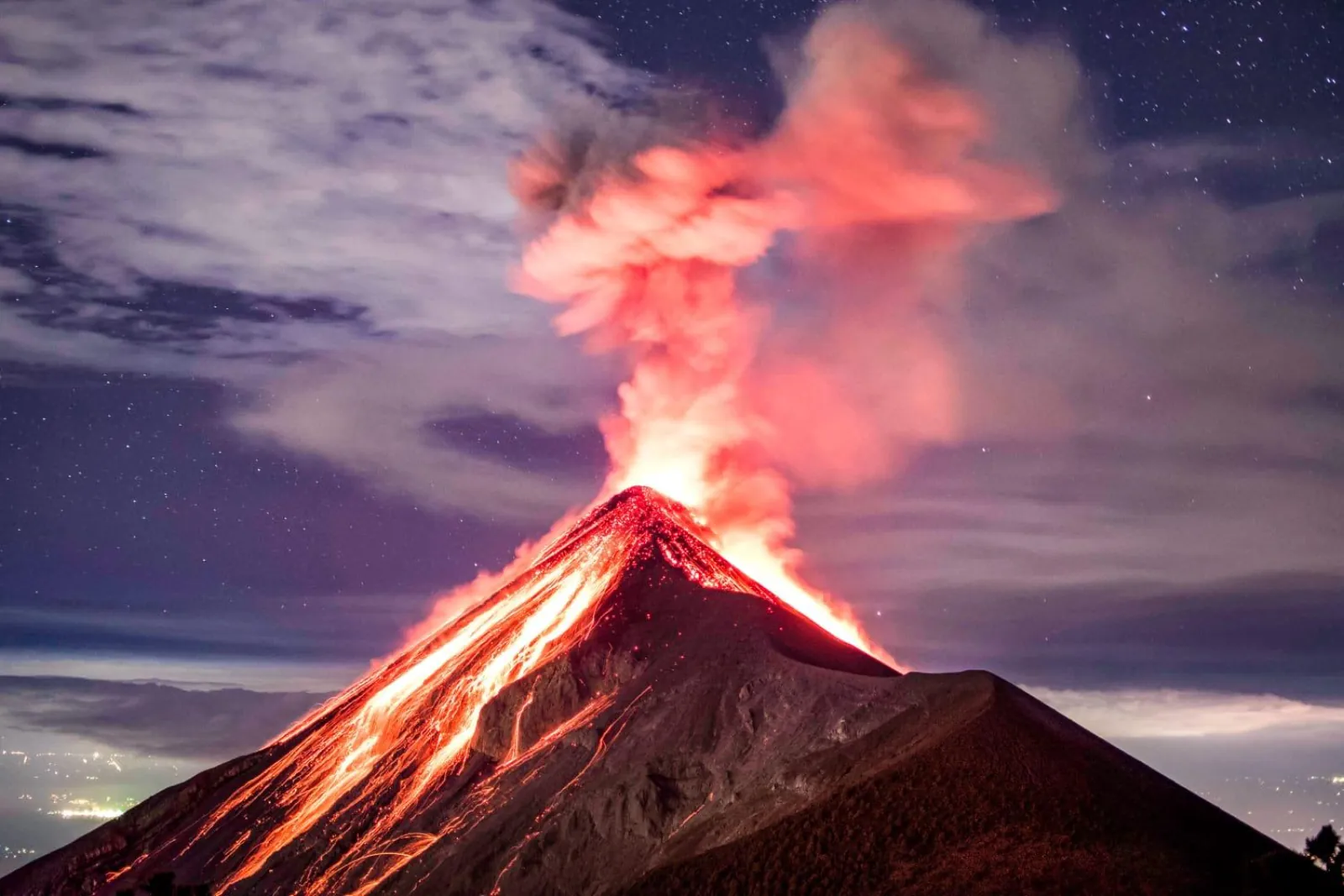
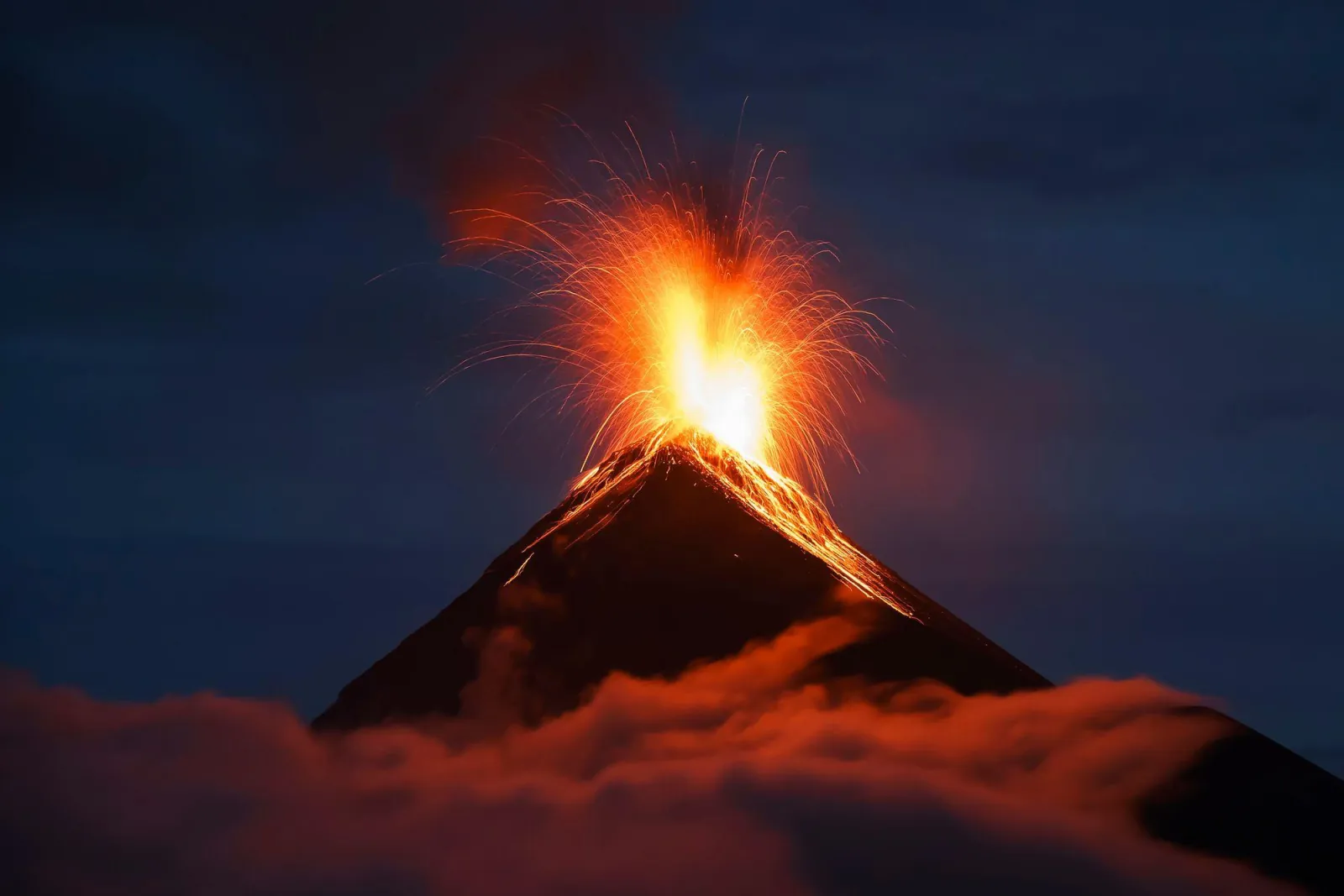
- Fuego's eruptions in view from base camp in the evening
- A sunrise summit push to 3,976 m, or the choice to wait at camp
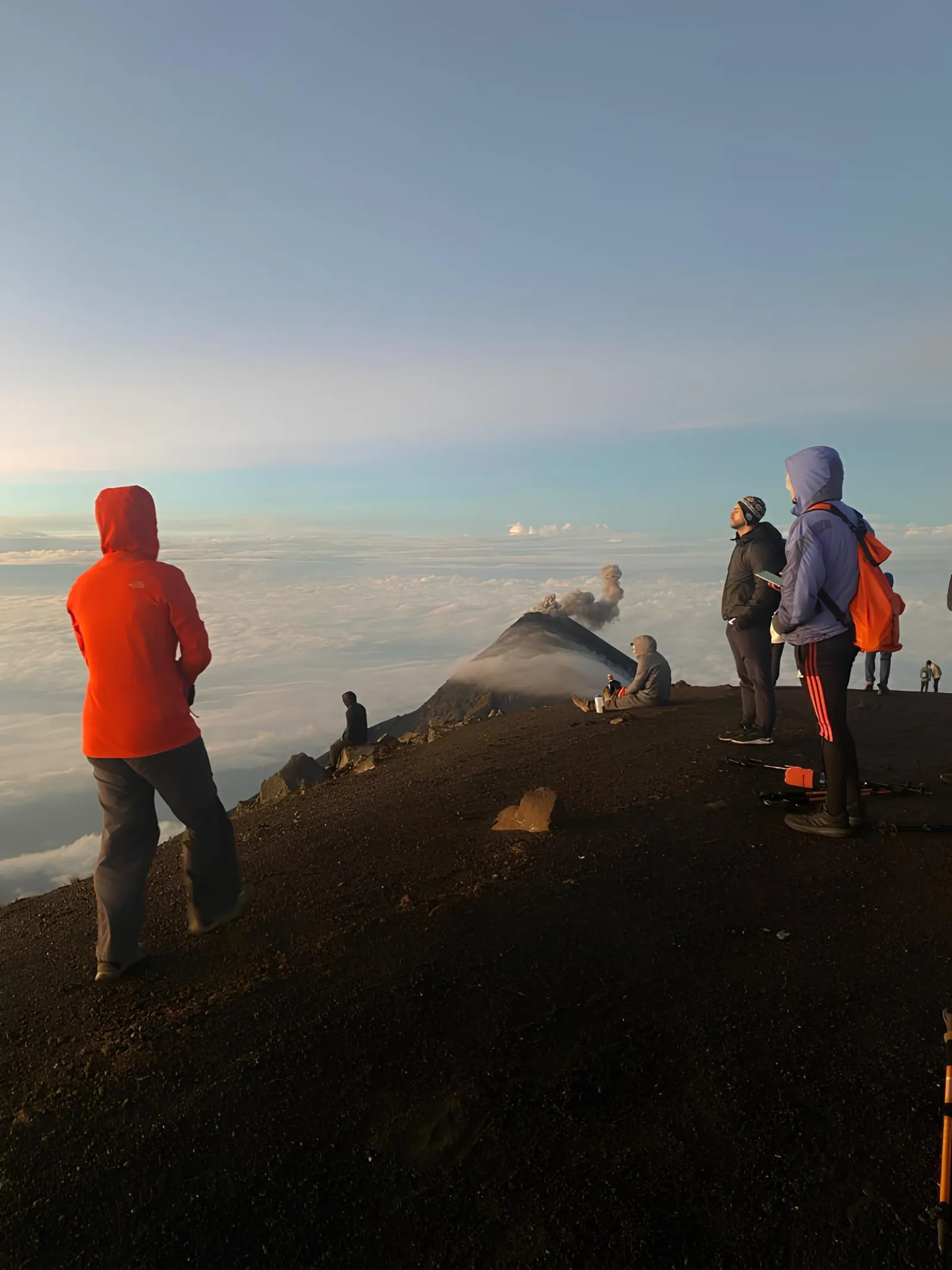
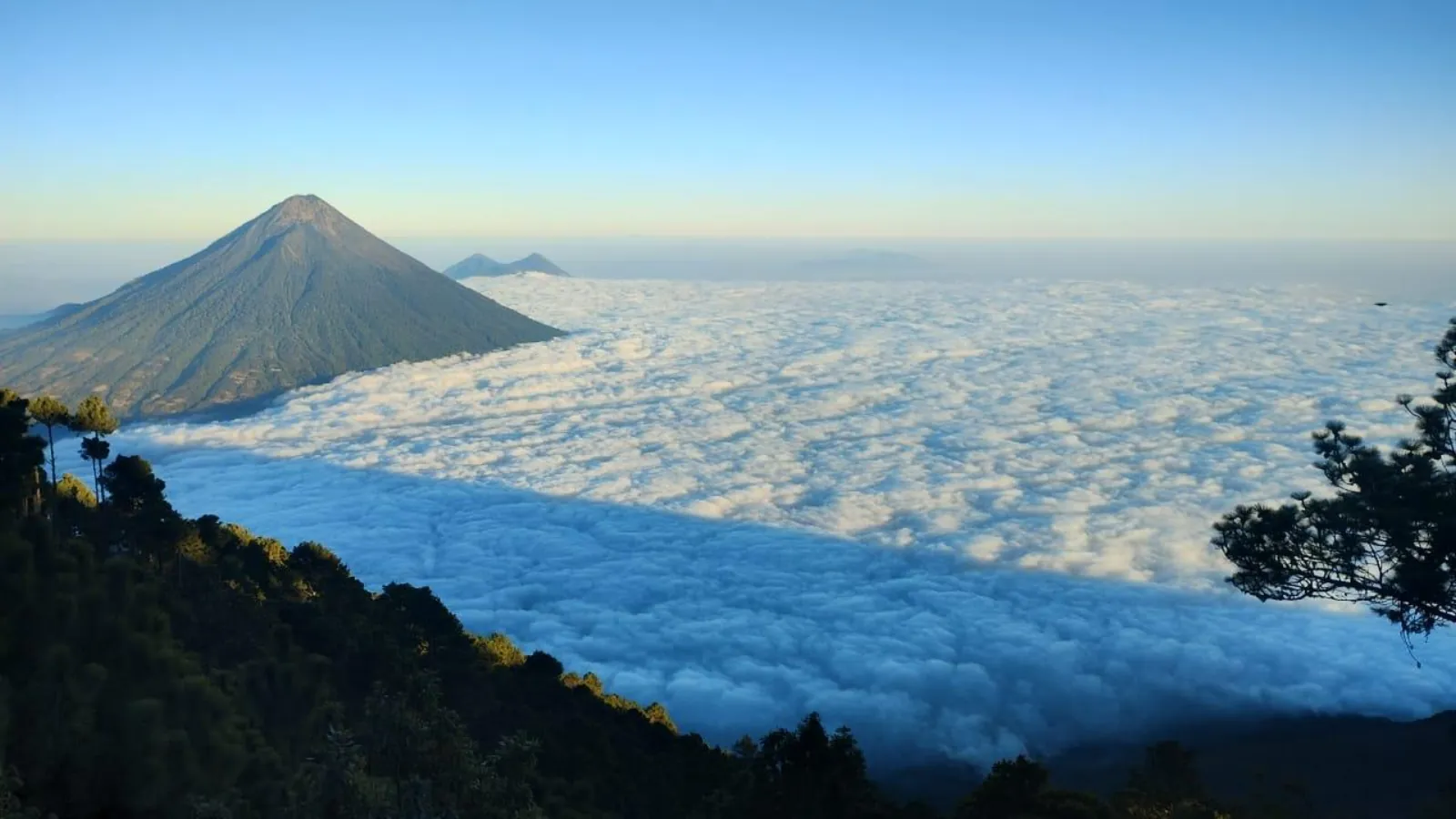
- Views above the clouds from camp on clear days
- Poles, boots, backpacks and flashlights to rent before you start
- Drop-off at your accommodation in Antigua on day two
What's Included
- Round-trip transport from your hotel in Antigua
- Dome (or cabin) accommodation with sleeping bag and mat
- Lunch and dinner on day 1, breakfast on day 2, plus hot chocolate
- Gloves, a warm hat and a non-waterproof jacket
- Guide (Spanish-speaking)
- Luggage storage
Timing Your Night Facing Fuego
Pick the month, check the bulletin, reach camp before dark, and watch from dusk to dawn.
Choose dry-season dates with a spare day
December to February are the driest months on Acatenango's summit in model data, with November, March and April close behind. Book a date with a free day after it: GetYourGuide refunds you in full if you cancel up to 24 hours ahead, so you can move the hike if the forecast or a park notice turns.
Read the morning bulletin
INSIVUMEH publishes its daily Fuego bulletin around 7 to 8 a.m. Guatemala time. Check it, the CONRED notices and your operator's messages the day before you climb and on the morning itself.
Climb in the afternoon light
Volcano Expeditions picks you up in Antigua and stops at its station at 8:45 a.m. for food and gear. The climb from La Soledad takes 4.5 to 6 hours, and lower-rated reviews describe hiking that only starts around noon, so carry snacks and a headlamp.
Watch from dusk until dawn
The glow shows best after dark. Before sunrise you can push for the 3,976 m summit or wait at camp, then walk down after breakfast and ride back to your Antigua hotel.
Photo Gallery
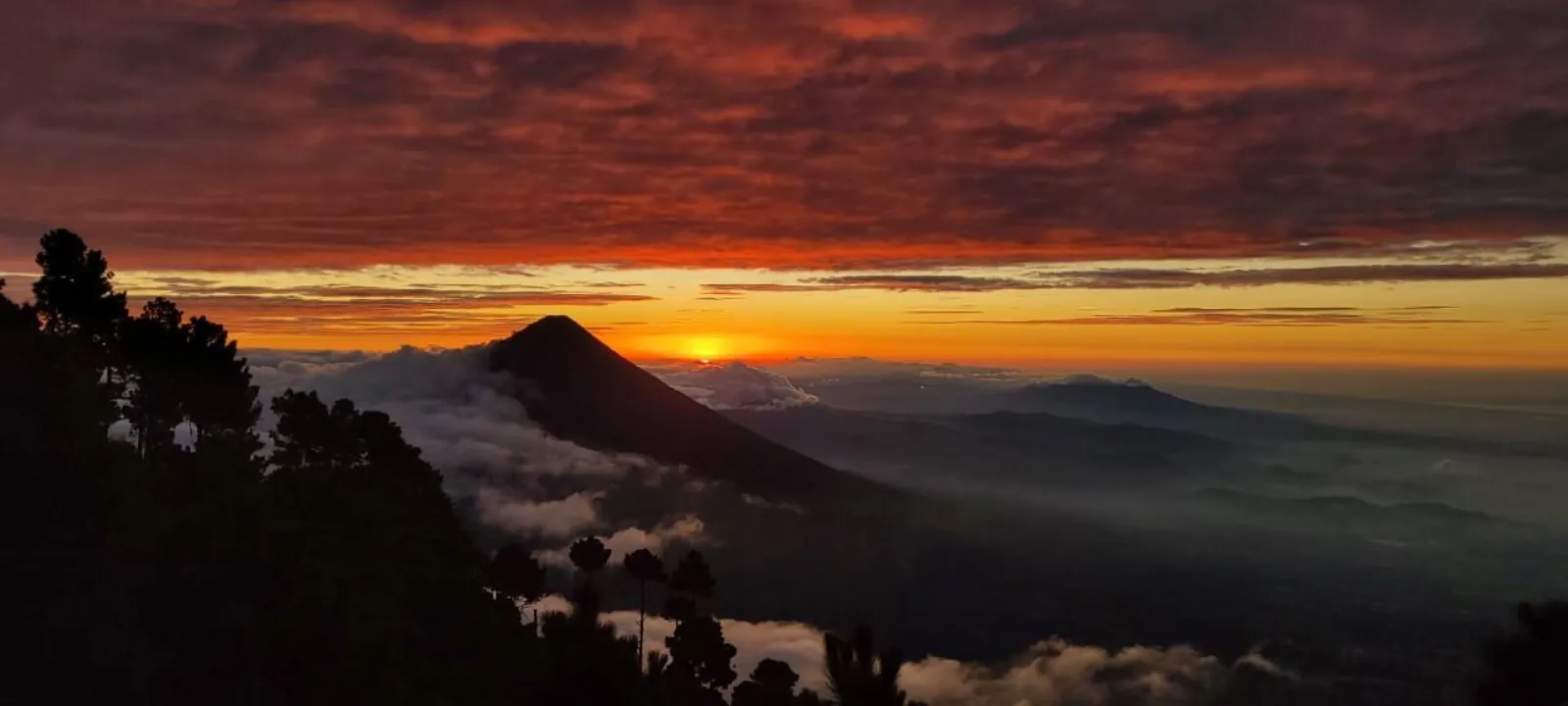
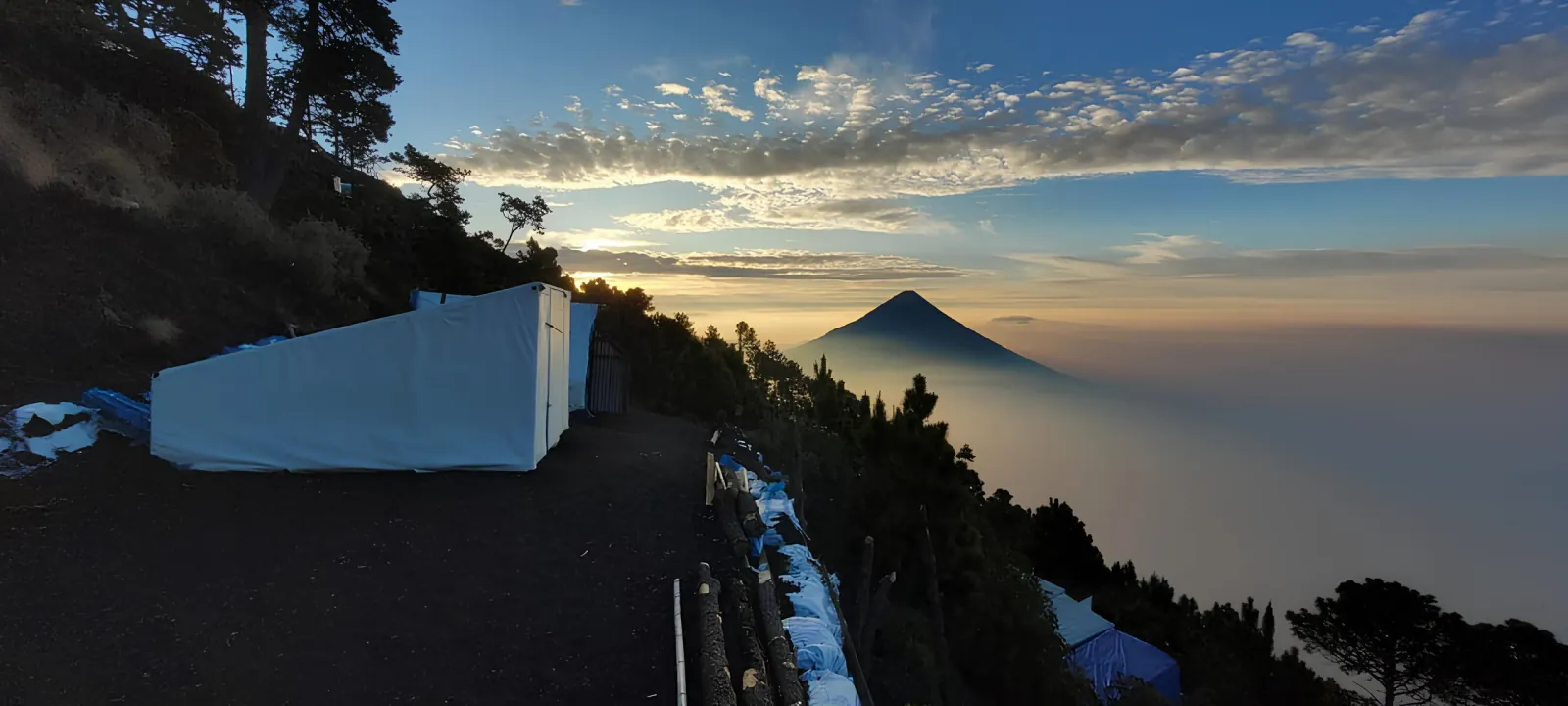
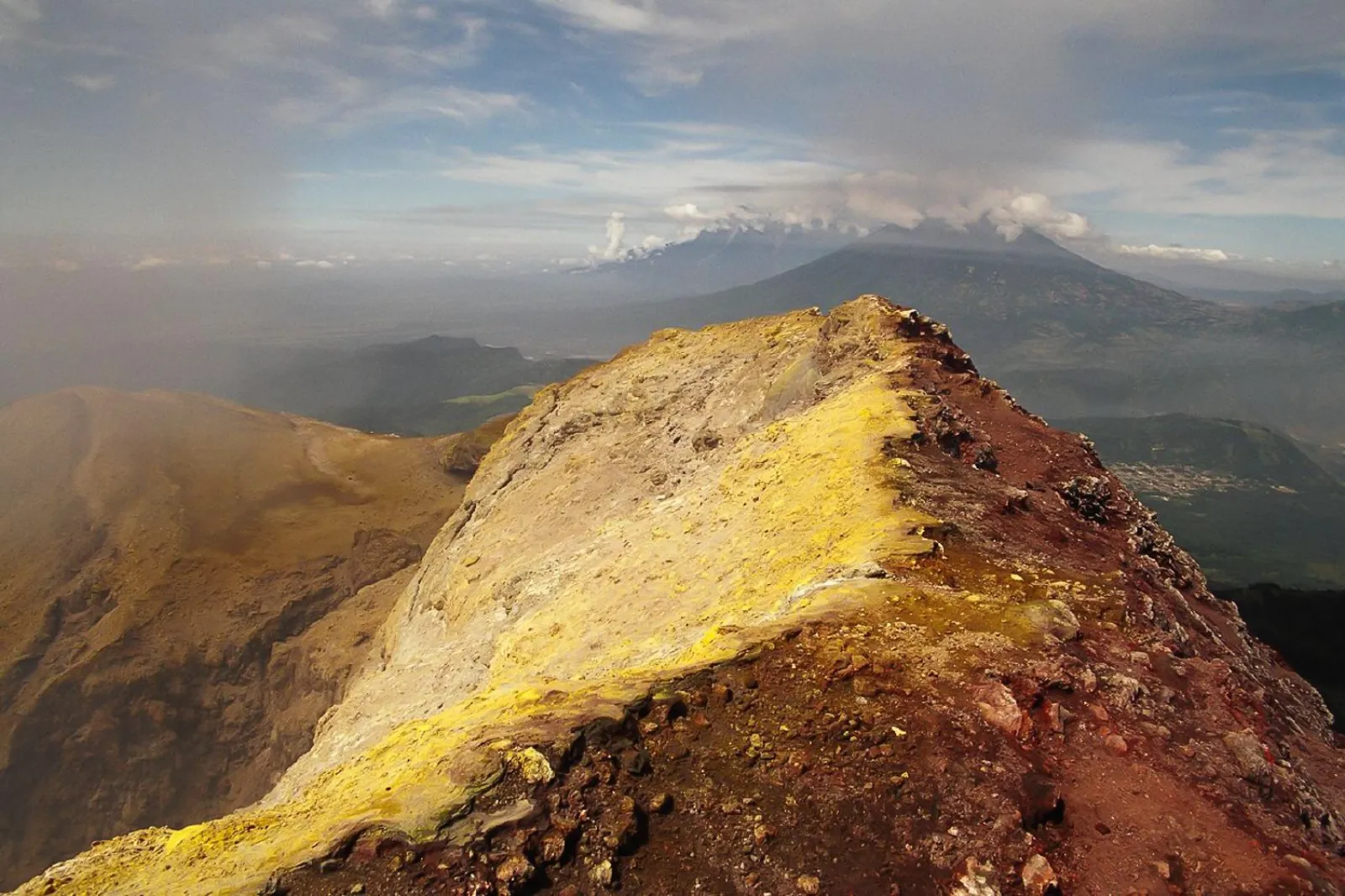
Camp Views on Volcano Expeditions
Guest and operator photos from Volcano Expeditions' two-day Acatenango hike.
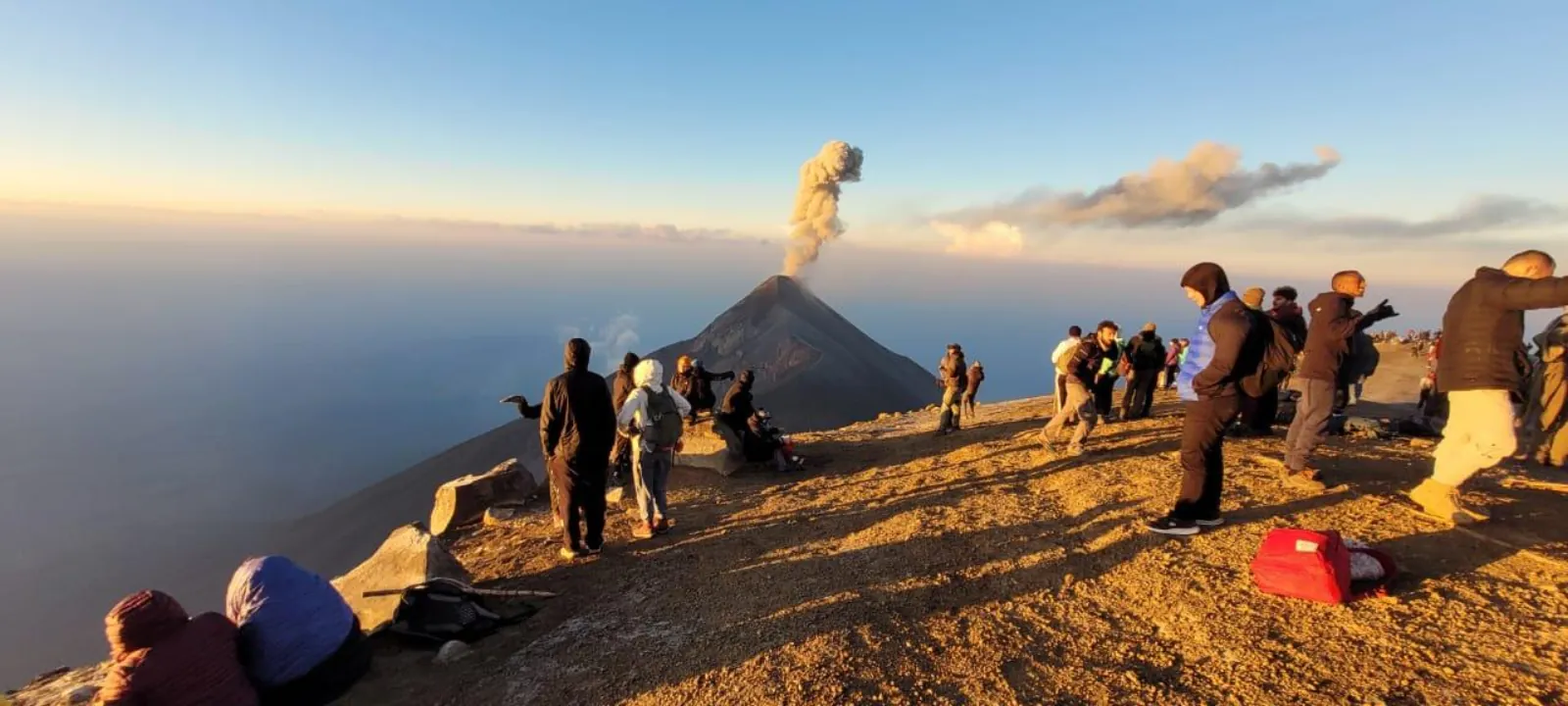
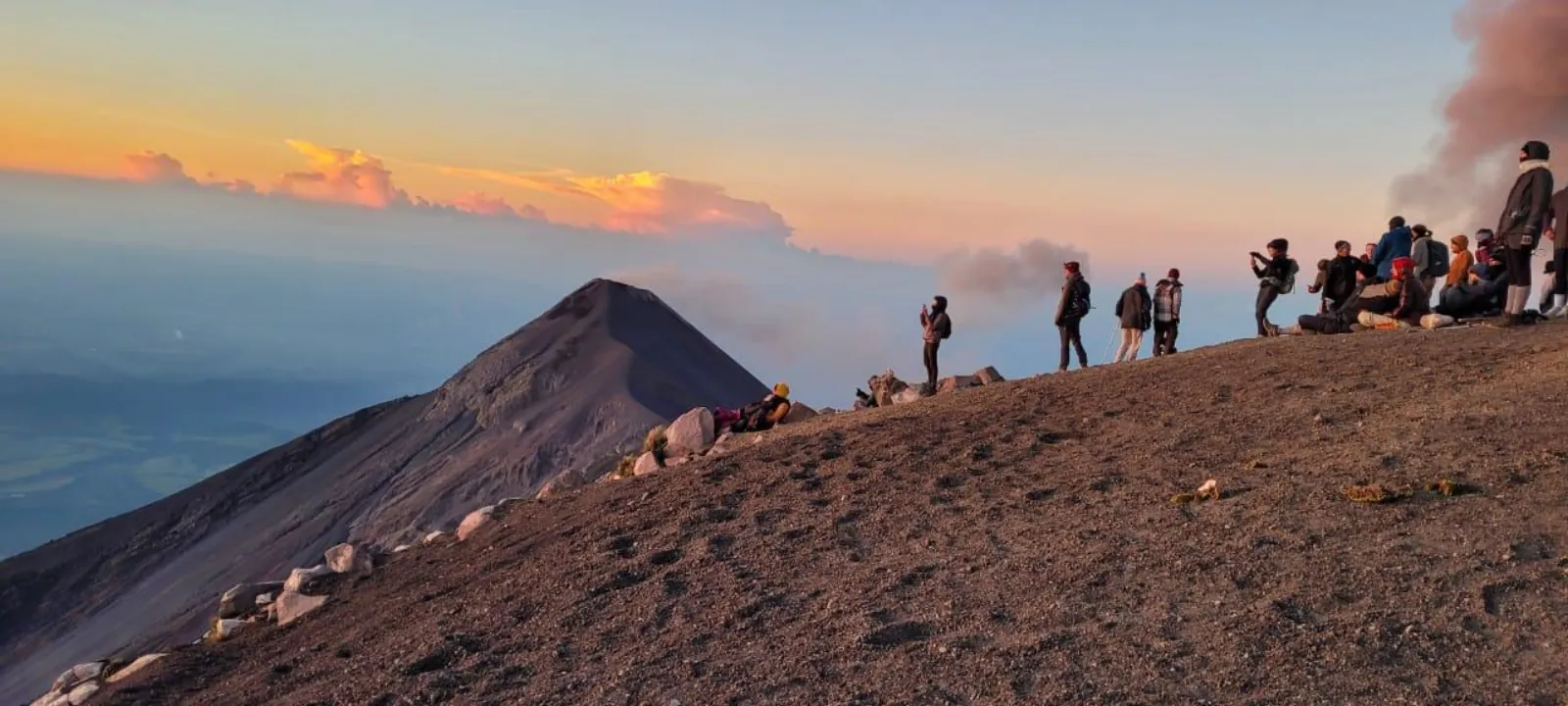
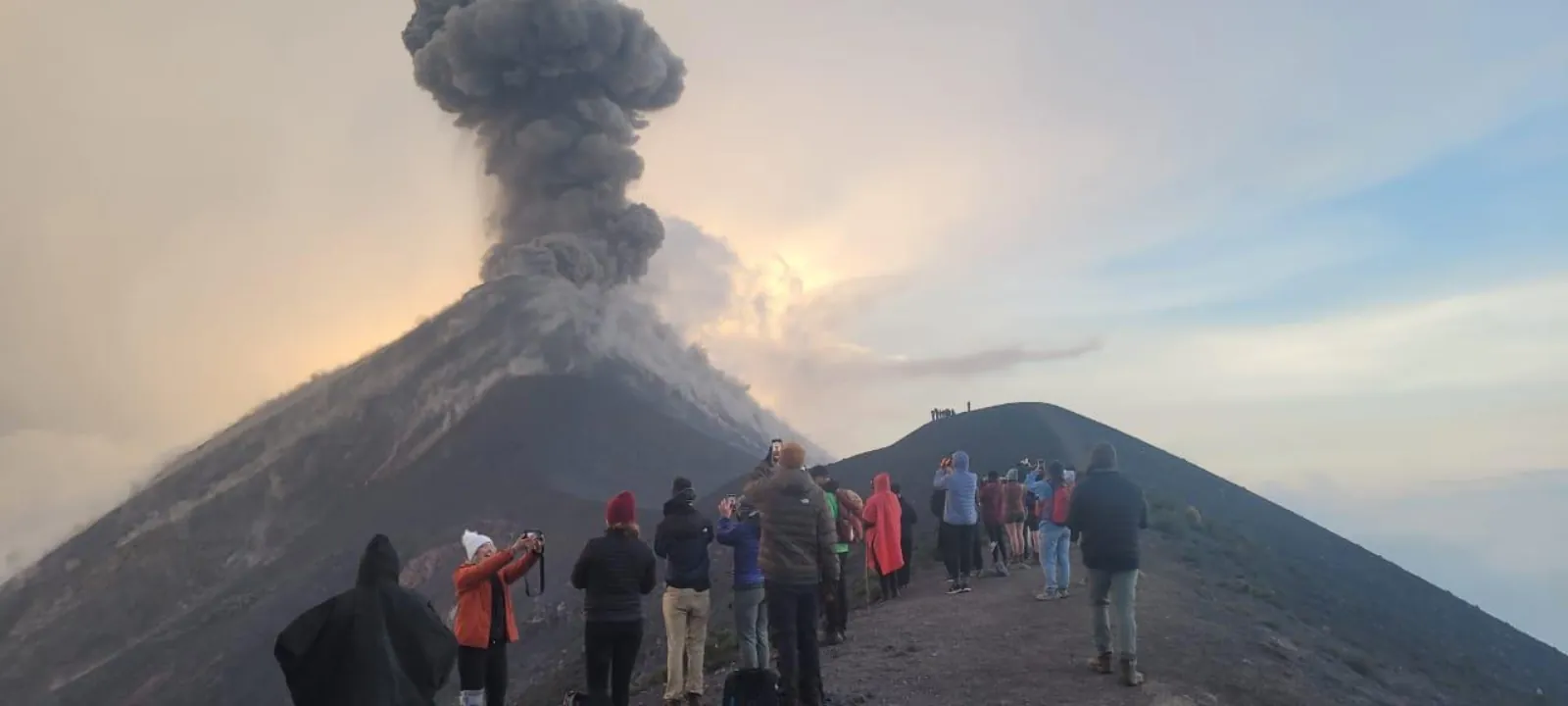
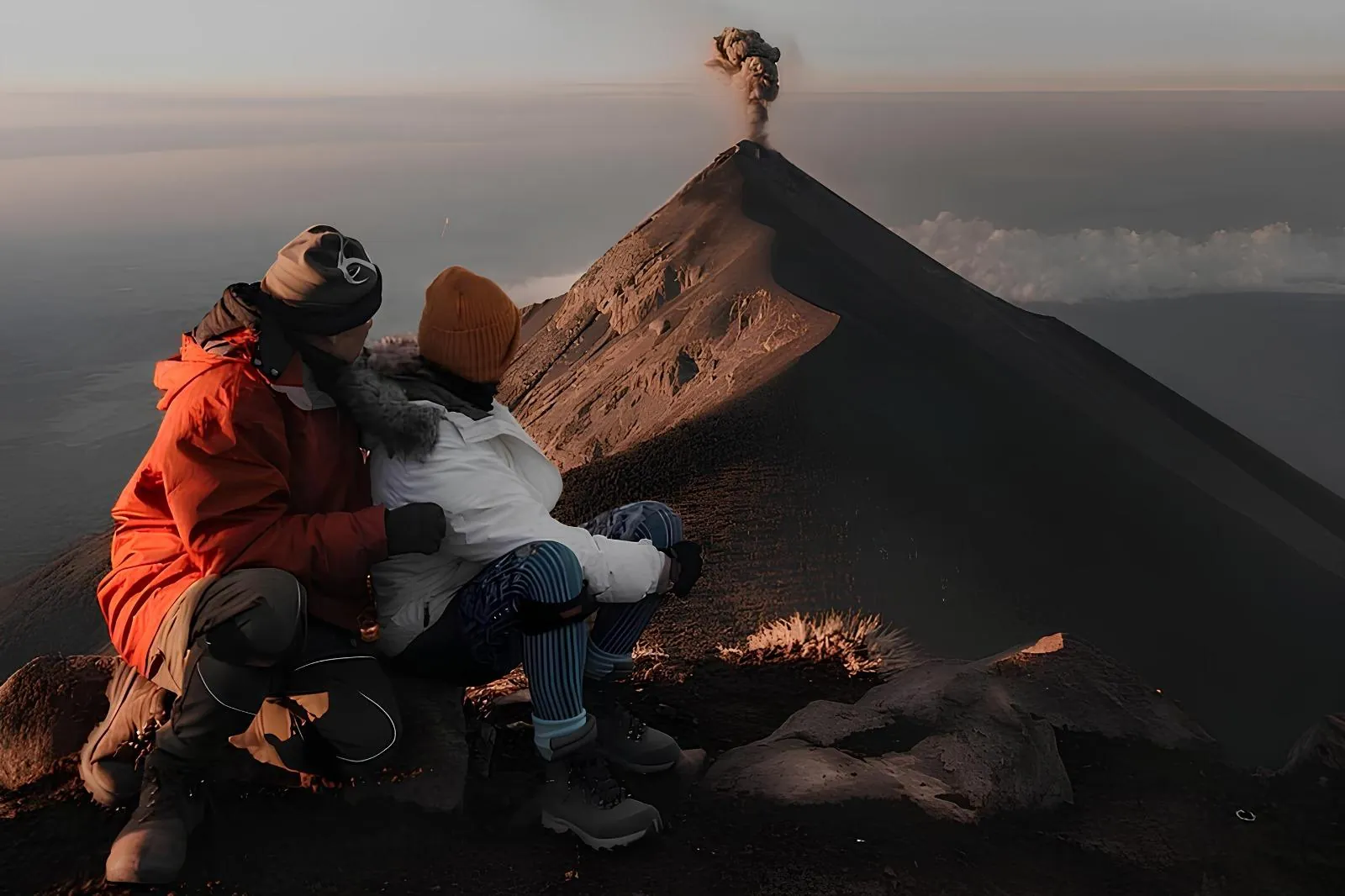
Three Overnights for a Dry-Season Night
Volcano Expeditions, the A-frame cabin trip and CA Travelers, compared on what matters when you time your climb.
| Feature | FROM US$57 · HOTEL PICKUP Volcano Expeditions 2-Day Acatenango Hike | Acatenango A-Frame Cabin Overnight | CA Travelers Acatenango Overnight Hike |
|---|---|---|---|
| Price from (per person) | US$57 on GetYourGuide | US$90 on GetYourGuide | US$129 on Viator |
| If the weather turns | ✓ Free cancellation up to 24 hours ahead | ✓ Free cancellation up to 24 hours ahead | ✗ All sales final |
| Holiday departures | Check the booking calendar | Check the booking calendar | None from 24 Dec 2026 to 1 Jan 2027 |
| Morning start | Hotel pickup; operator station at 8:45 a.m. | Pickup point in Antigua, sent with confirmation | CA Travelers office in Antigua |
| Climb to camp | 4.5 to 6 hours from La Soledad | About 1,500 m up to a camp at about 3,700 m | 4 to 6 hours, about 1,500 m up |
| Gear for the cold night | Dome or cabin, sleeping bag and mat; hat, gloves, non-waterproof jacket | A-frame cabin and sleeping bag; warm clothes to rent | ✓ -6 °C sleeping bag, liner, extra blanket, winter jacket |
| Sunrise | Summit at 3,976 m or wait at camp | Guided sunrise summit, weather permitting | Leave camp before dawn for the 3,976 m summit |
| Q100 park fee | ✗ Pay Q100 cash at the gate | ✗ Pay Q100 cash at the gate | ✓ Included |
| Extra Fuego hike | ✗ Offered for Q200: banned, do not book | ✓ Not sold | ✓ Not advertised |
| Guide language | Spanish | Spanish, English | English, Spanish |
| Rating | 4.4 / 5 (1,800+ reviews) | 4.5 / 5 (1,040+ reviews) | 4.8 / 5 (330+ reviews) |
| Book Now | See on GetYourGuide | See on Viator |
Other ways to go
Other Nights and Days Near Fuego
The A-frame cabin overnight with no Fuego add-on, CA Travelers with the park fee included, a six-person small group, and a half-day Pacaya hike with views of Fuego.
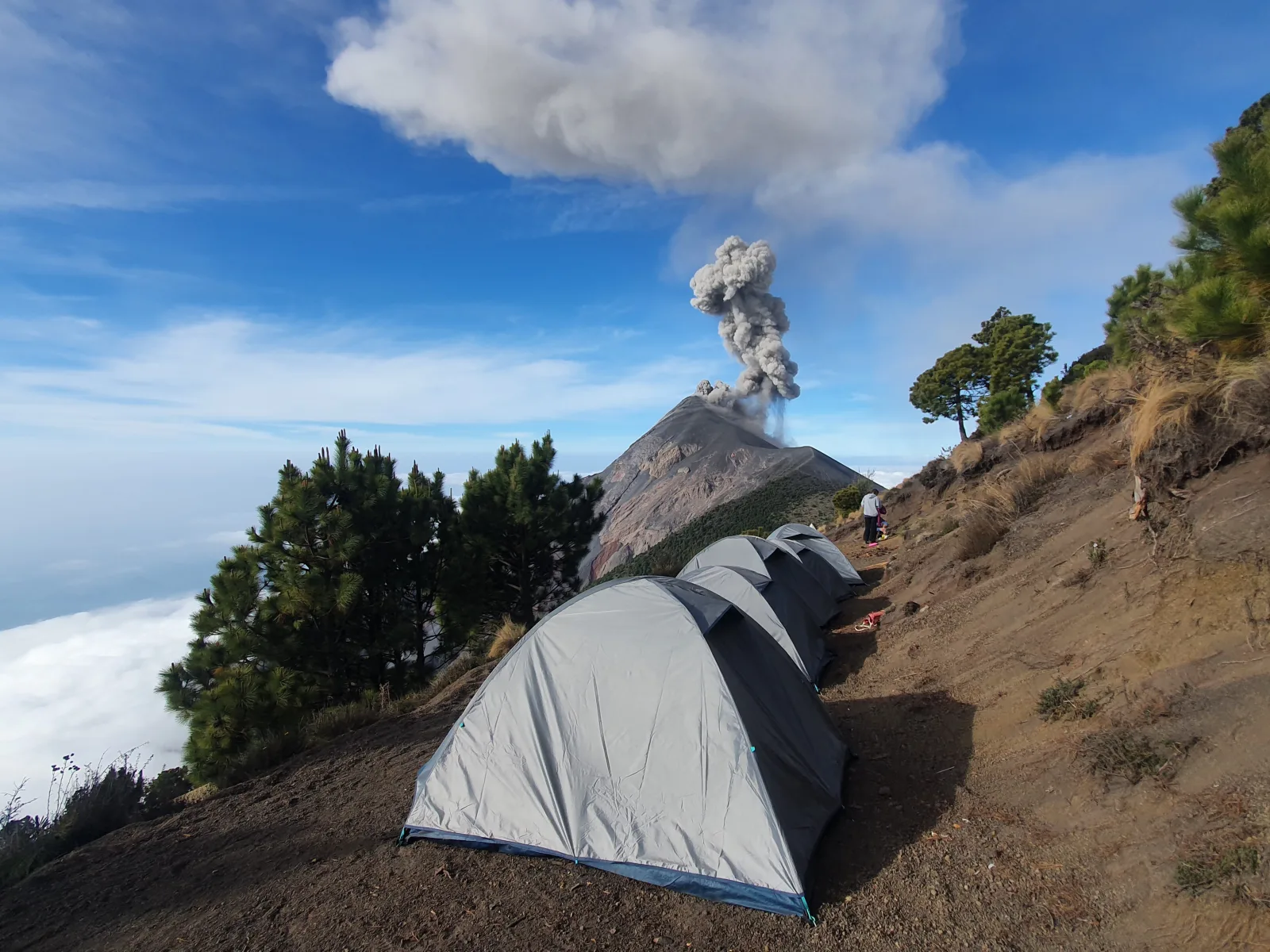 NO FUEGO ADD-ON · CAP 12
A-Frame Cabin Overnight Facing Fuego
Two-day Acatenango hike from Antigua with A-frame cabins, three meals and a 12-person cap, from US$90 on GetYourGuide.
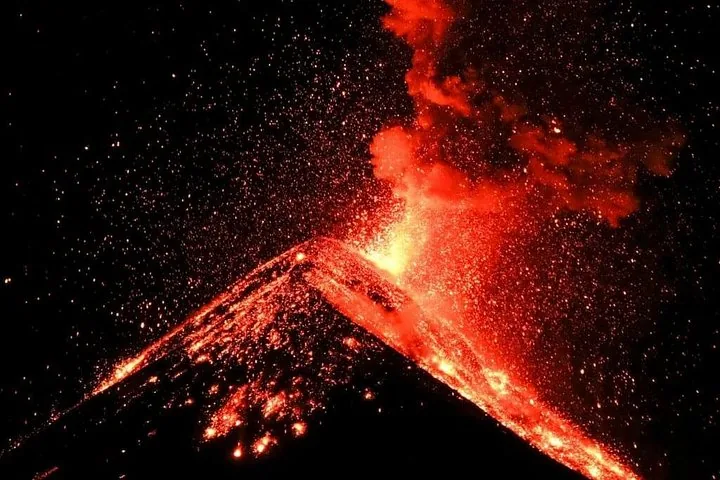 PARK FEE INCLUDED
CA Travelers Cabin Overnight (Viator)
CA Travelers' overnight Acatenango hike: about US$129 per person, 4.8/5 from 330+ Viator reviews, park fee, meals and shared 4-person cabins included.
 GROUP CAPPED AT 6
Small-Group Cabins, Fuego From Bed
Small-group Acatenango hike with 1 guide per 6 hikers, cabins and park fees included, from US$170 on GetYourGuide.
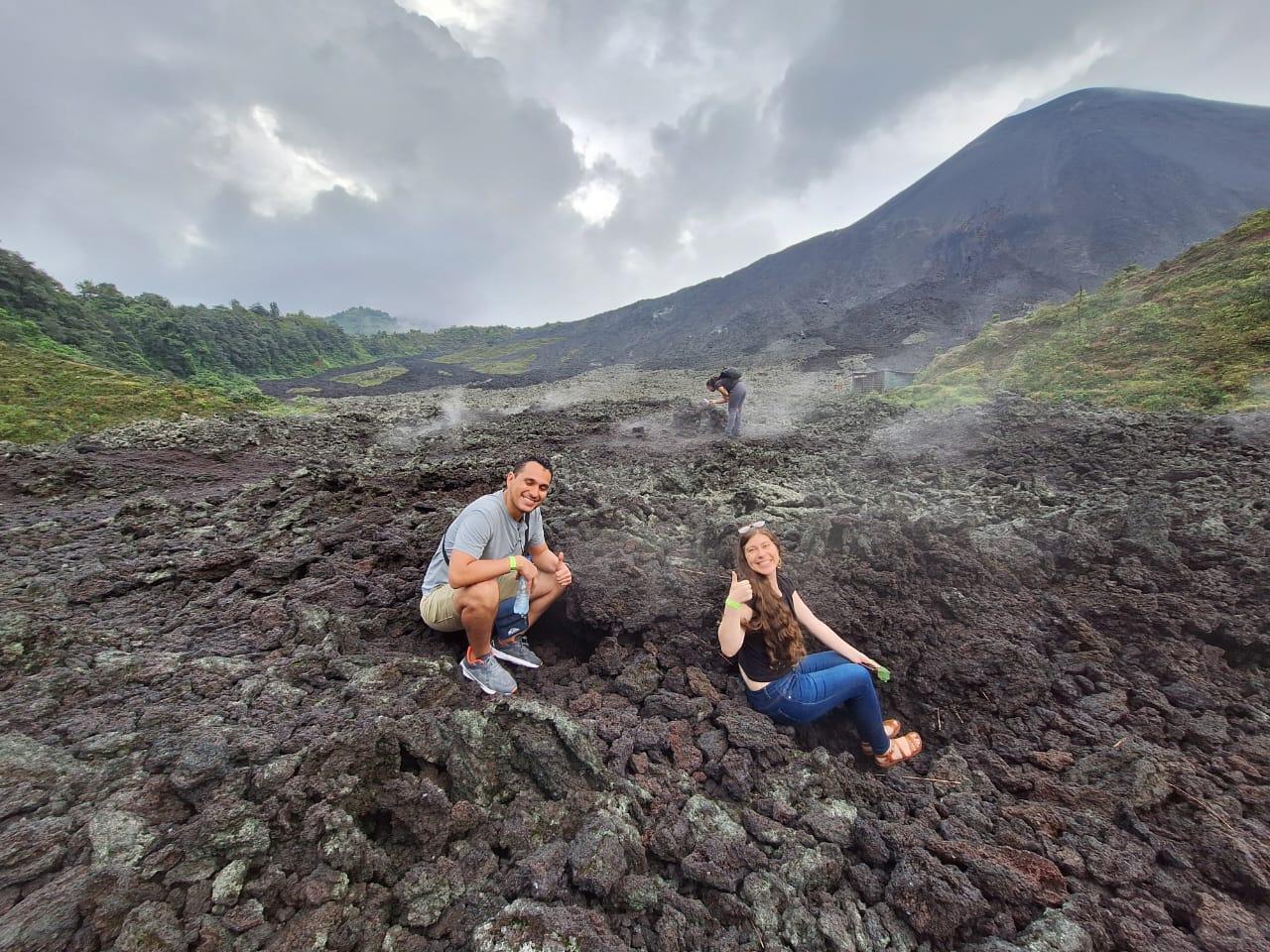 PACAYA · 6 HOURS
Pacaya Volcano Half-Day Hike
When to go
Months, Hours and Weather for Seeing Fuego
Rain and cold month by month, the hours when the glow shows, and why the volcano's own rhythm is not something you can plan around.
The best time to see Fuego erupt is after dark on a clear night between December and February, with November, March and April close behind: Fuego erupts all year, so you are choosing for the weather.
Fuego has been erupting continuously since 4 January 2002, according to the Smithsonian Global Volcanism Program. INSIVUMEH’s daily bulletins from 31 October to 12 November 2026 logged roughly 1 to 8 explosions an hour, with glowing rock thrown 100 to 300 m above the crater. You will not find a month when it stops, and you cannot pick one when it erupts harder. You can pick the months when cloud is least likely to hide it, and the hours when the glow stands out. The tour featured here, Volcano Expeditions’ two-day hike, costs from US$57 per person, rated 4.4/5 from 1,800+ reviews on GetYourGuide, with free cancellation up to 24 hours ahead. Its listing still sells an extra Fuego hike for Q200; that climb is banned under current rules, so leave it out.
Rain and cold on Acatenango, month by month
The table pairs long-term rainfall in Antigua, where you sleep before and after the hike, with modelled figures for Acatenango’s 3,976 m summit. The camps sit 200 to 550 m below the summit, so camp nights run slightly warmer than the last column.
| Month | Antigua rain (mm) | Antigua rainy days | Summit rainy days (model) | Summit average low (model) | For seeing Fuego |
|---|---|---|---|---|---|
| January | 3 | 8 | 5 | -3 °C | Driest on the summit; coldest nights |
| February | 5 | 6 | 6 | -2 °C | Dry and cold |
| March | 6 | 6 | 13 | -2 °C | Dry in town; more showers up high |
| April | 28 | 9 | 21 | 0 °C | Last dry month in town; showers more often up high |
| May | 120 | 18 | 29 | 0 °C | Rains begin |
| June | 263 | 26 | 29 | 0 °C | Wettest month in Antigua |
| July | 194 | 25 | 27 | 0 °C | Wet, muddy trail |
| August | 155 | 24 | 29 | 0 °C | Wet |
| September | 237 | 26 | 29 | 0 °C | Second-wettest in Antigua |
| October | 141 | 22 | 29 | 0 °C | Still wet; lahar warnings |
| November | 26 | 12 | 18 | -2 °C | Dry in town, mixed on the summit |
| December | 9 | 8 | 9 | -2 °C | Dry and cold |
December, January and February are the three driest months on the summit in the model, with 5 to 9 rainy days each, so they give you the best odds of a clear night at camp. March is almost as dry in Antigua but sees 13 rainy days up high. November looks dry from town (26 mm over 12 days) and wetter on the mountain (18 rainy days in the model), yet early November 2026 stayed mostly clear at the volcano: INSIVUMEH’s Fuego observatory described the sky as clear in 10 of its 13 daily bulletins from 31 October to 12 November, and partly cloudy in the other three. From May to October Antigua gets rain on 18 to 26 days a month, and June and September are the wettest.
When the glow shows and when the ash shows
Plan to be at camp by late afternoon. Overnight tours usually reach camp somewhere between about 2:30 and 4:30 p.m., depending on the operator and the group’s pace, which leaves you the sunset, the whole night and the dawn facing Fuego.
- After dark is when the glow stands out. Glowing rock thrown above the crater is hard to pick out in daylight and obvious against a black sky. INSIVUMEH’s bulletin of 7 November 2026 reported incandescence at the crater during the night and early morning.
- Before dawn is the summit push. Groups leave camp around 3:30 to 4 a.m. for the hour-and-a-half climb to 3,976 m. On a clear morning you stand above the clouds with Fuego smoking below.
- By day you see the ash. Bulletins put the columns at 4,200 to 5,000 m above sea level, which means plumes rising roughly 0.4 to 1.2 km above the 3,763 m crater, grey against a blue sky.
- Afternoons in the rainy months tend to cloud over, so a clear morning in town is no promise of a clear evening at camp.
If you are photographing, the dark hours matter most; our night photography guide covers settings and the cold.
Fuego’s activity follows no calendar
The volcano and the weather run separately. In the 13 bulletins from 31 October to 12 November, the hourly explosion count swung from 1 to 2 (31 October) to 5 to 8 (11 November) with no change of season. Fuego’s larger paroxysms fall in any month: March 2025, June 2025 and 3 to 5 August 2026, dry season and rainy season alike. The August episode closed Acatenango to hikers from 3 to 7 August, so a bigger eruption can cost you the trip outright.
You cannot time any of this by month. Check the latest activity on Fuego the day before and on the morning you climb. INSIVUMEH usually publishes the daily bulletin between about 7 and 8 a.m. Guatemala time, and it records what the observatory saw. It is not a forecast and not a safety clearance, so read it alongside CONRED’s notices and your operator’s messages.
Cold nights in the clear months
The clearest months are also the coldest. The summit model gives average lows at or below 0 °C in every month and -2 to -3 °C from November to March. Tour listings warn that camp nights fall to around or below freezing from December to February, and one operator gives 0 to 4 °C at its base camp. On Acatenango the deadly hazard on record is the cold: in January 2017 six Guatemalan climbers died of it on the mountain. Pack a warm hat, gloves and a dry base layer to sleep in, and check whether your tour lends a jacket. Volcano Expeditions lends one, but it is not waterproof.
The wet months and lahars
From May to October you climb into more cloud, more rain and a slick trail, and you may still get a clear window. On Fuego itself the wet season brings lahars: mud and boulder flows that form when rain mixes with loose ash in the ravines on Fuego’s flanks, such as Seca and Ceniza. Lahars on 7 October 2026 carried boulders up to 3 m across. CONRED’s notice of 6 November 2026 still warned that rain could set them off. They threaten the ravines and the communities below Fuego, and they are one more reason authorities issue warnings in the wet months. If you go in the rainy season, pack a rain shell, keep your plans flexible and read the bulletin each morning.
Plan a spare day in Antigua
Cloud or a closure can cost you the view, so leave a free day after your hike date. Tours leave Antigua in the morning and are back around noon the next day. Arrive, hike the next morning, and keep the third day open. The GetYourGuide tours on this site let you cancel for a full refund up to 24 hours ahead, which lets you move to the spare day if the forecast turns. CA Travelers’ overnight on Viator is all sales final and shows no departures from 24 December 2026 to 1 January 2027, so plan a holiday climb around that gap.
When the weather beats you anyway, the official cameras still show what Fuego is doing; see our Fuego live cams page. To choose the night itself, compare every camp on our Acatenango overnight tours page, or check Volcano Expeditions’ dates.
Guest Reviews
What Volcano Expeditions Hikers Say
4.4/5
from 1,800+ verified hikers
Ratings and review counts are each platform's own figures (GetYourGuide or Viator) as of November 2026 and change day to day.
"A must-do in Guatemala! The views from the camp are amazing, but be warned that the hike is gruelling and there is an additional hike in the evening (5 hour round trip) to actually reach the volcano. Would recommend to bring a LOT of snacks!"
"Volcanos were spectacular, good group. Trails are kinda trashed."
"The activity was very challenging but so worth it! Don’t worry if you stray behind because a guide will always stick with you and make sure you’re okay! Make sure to bring plenty of water and layers they aren’t joking when they say it’s FREEZING at base camp! Be warned though fuego hike is pitch black and very physically demanding so be prepared to push your limits! I did zero training and managed to do it!"
"The hike really requires good physical fitness, so don’t underestimate it!! Otherwise, the views were worth it, the food was good, and the guides helped with everything we needed."
"This hike is amazing! The views are just incredible! We did both the El Fuego hike and the sunrise hike. It’s super tough but really worth it! The accommodation and food is basic but fine! Bring lots of snacks though, you’ll need it - we wished we brought more!"
Read all 1,800+ verified reviews
See All ReviewsBook a Dry-Season Night Facing Fuego
From US$57 per person, rated 4.4/5 from 1,800+ reviews on GetYourGuide, with free cancellation up to 24 hours ahead if the weather turns. The Q100 park fee is extra, in cash. Starting from $57 per person.
Check Dates & Tour OptionsCan't Make These Dates?
Browse More Available Options
Other tours for seeing Fuego from Antigua, each with its own review and booking link.
Timing a Fuego Trip: Questions
The best months and hours to watch Fuego from Acatenango, the cold, the rain and the spare day.
December, January and February give you the best odds of a clear night at camp: they are the three driest months on Acatenango's summit in model data, with 5 to 9 rainy days each. November, March and April are close behind. Fuego erupts all year, so you are choosing for the weather, and no month guarantees a clear sky.
Yes, on a clear night, but your odds drop. From May to October Antigua gets rain on 18 to 26 days a month, the summit model shows rain on 27 to 29 days, and the trail turns slick. Pack a rain shell, keep a spare day, and book a tour you can cancel for free up to 24 hours ahead. Acatenango overnight tours compared.
After dark. Glowing rock thrown 100 to 300 m above the crater is hard to pick out in daylight and clear against a black sky, and INSIVUMEH's bulletin of 7 November 2026 reported incandescence during the night and early morning. By day you see grey ash columns instead. Overnight tours reach camp in the afternoon, so you have the whole night facing the volcano.
No pattern shows up. Fuego has erupted continuously since 4 January 2002 (Smithsonian Global Volcanism Program), its hourly explosion count changes from day to day, and its larger paroxysms came in March 2025, June 2025 and August 2026. Check the latest bulletin the day before and the morning you climb. Is Fuego erupting today?
Expect a night around or below freezing, especially from December to February. The summit model gives average lows of -2 to -3 °C from November to March, and the camps sit 200 to 550 m lower, so they run slightly warmer. Sleep in a dry base layer, a hat and gloves, and check what warm gear your tour lends.
Yes. Cloud can hide Fuego all night, and the park closed from 3 to 7 August 2026 during an eruption. Tours are back in Antigua around noon the next day, so a free day after your hike date lets you move the climb. GetYourGuide tours on this site refund you in full up to 24 hours ahead; CA Travelers on Viator is all sales final.
Still have questions? Email us at info@fuego-volcano.com
Keep Exploring
Explore More
Every status page, guide and tour review on the site.
Fuego Today & Planning
Tour Reviews
- Acatenango A-Frame Cabin Overnight Review: Fuego View
- Brothers Expeditions Acatenango Overnight: Review
- CA Travelers Acatenango Overnight Review (Viator)
- Hobbitenango & Cerro de la Cruz Tour: Review
- Marvelus Pacaya Volcano Trek: Review
- Small-Group Acatenango Eruption-View Cabins: Review
- Volcano Expeditions Acatenango Overnight Review
- Volcano Expeditions Pacaya Tour: Review